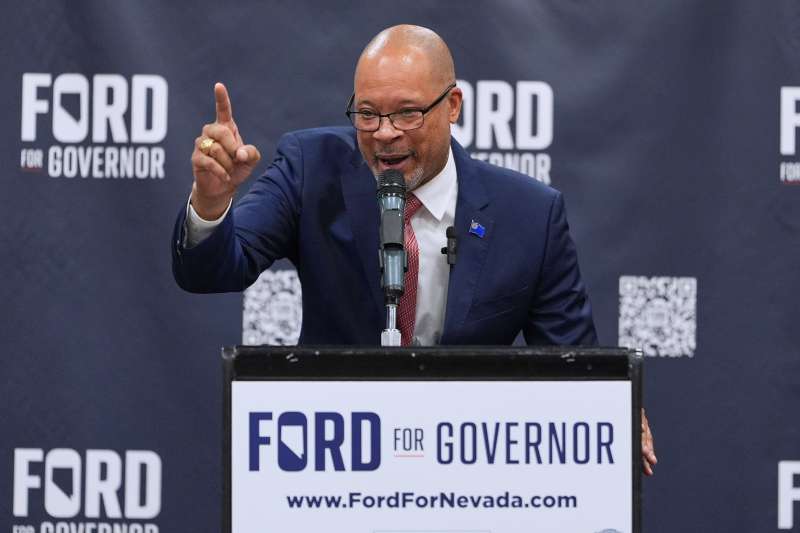
Attorney General Aaron Ford, the Democratic nominee for governor, announced Sept. 9 that, if elected, he will introduce legislation to expand the Public Utilities Commission of Nevada (PUCN) with commissioners who have consumer protection experience, and reiterated that data centers should pay for the power infrastructure they require.
“Under Joe Lombardo, NV Energy and data centers are raising electricity bills on consumers as Nevadans are already struggling to afford gas, groceries, rent, and health care,” Ford said in a statement.
According to NV Energy’s Integrated Resource Plan, without “risk mitigation controls,” data center infrastructure costs could shift onto Nevadans. NV Energy recognized this in its filing. The utility company plans to spend roughly $3.5 billion in capital projects over three years to serve data centers.
Data centers, along with the PUCN, have become contentious campaign issues as the two gubernatorial candidates are divided on the topics. Republican Gov. Joe Lombardo called data centers the “new gold rush,” whereas Ford plans to pause their tax abatements pending a state audit and enforce stricter guardrails on new developments.
In Lombardo’s agenda released Thursday for his potential second term, Lombardo said Nevadans will not see power outages nor rate increases due to data centers. He also noted abated revenue from data centers will go directly to K-12 education and workforce development — but abated revenue is money the state can’t collect — meaning it’s unclear how he will achieve this goal.
A shifting record
In an attempt to single Ford out, PACs affiliated with Lombardo have pushed out ads to point out it was Ford who co-sponsored a bill in 2015 to give data centers tax abatements.
In response, Ford said “data centers of 11 years ago are not the data centers of 2026.”
“What you have to be able to do is to be flexible enough and responsive enough to understand that what I said 11 years ago was based on that information. You have new information now,” Ford said at an event with The Nevada Independent.
Community pushback
The charge has drawn statewide criticism. In June, more than 100 Nevadans showed up to give public comment to the commission against the price hike — but most were left waiting outside in triple-digit heat.
Angeles Reyes, a community organizer with Make the Road Nevada, previously told The Nevadan it felt “inhumane” and “fatal” to be forced to wait outside. Reyes got in line at 12:30 p.m. and waited until 4 p.m. to be heard. She was never able to give public comment.
“She saw many other groups who are a little older, who have [accessibility issues] and she feels that it’s inhumane having to wait outside to give a statement about how NV Energy is taking advantage of community members,” a translator for Reyes told The Nevadan.
The demand change
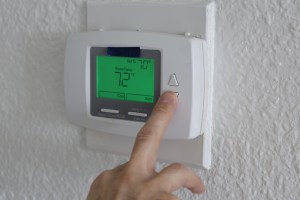
The PUCN, whose commissioners were appointed by Lombardo, approved NV Energy’s “demand charge” in 2025. Set to take effect Jan. 1, 2027, for Southern Nevada residential customers, the charge is based on the customer’s highest 15-minute period of energy use each day.
Ford’s office argues the charge will raise bills. NV Energy and PUCN say it will lower bills for 90% of customers without rooftop solar and add about $12 a month for solar customers.
In Ford’s plan, he notes it’s his goal for the commission to protect consumers and ensure utility price hikes aren’t passed to Nevada ratepayers.
On Aug. 18, an interim legislative committee declined to advance a bill draft request that would have banned mandatory daily demand charges. The only legislator who supported the request was outgoing assemblymember Howard Watts (D-Las Vegas).
“Most of NV Energy’s customers are paying more than their fair share to maintain the electric system, and it finds that the proposed demand charge would result in customer bills that align more closely with ratepayer use of the electric system,” a PUCN press release states.
If elected, Ford said, data center regulations and adding three new commissioners with consumer protection experience to the PUCN would be among his top legislative priorities in the 2027 session.