By Brett McGinness, Eric Lagatta and Carly Sauvageau / Reno Gazette Journal
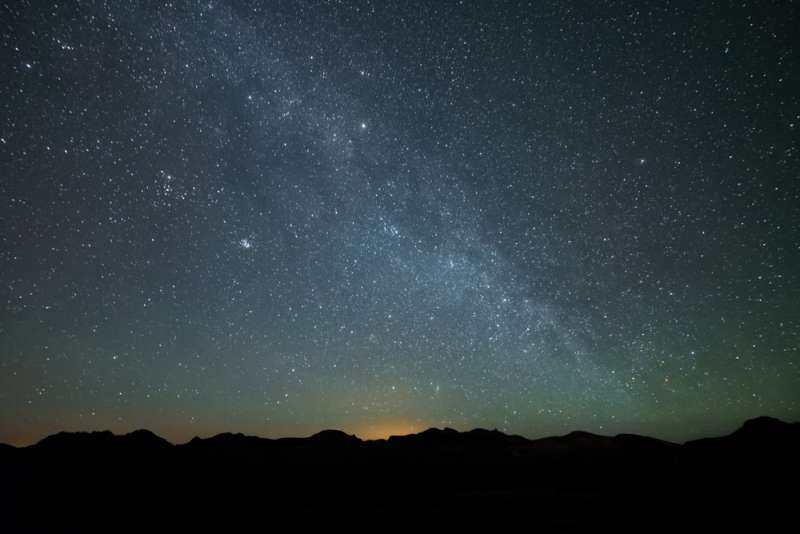
The best time to watch meteor showers is when the sky is dark during the new moon phase or before the moon rises. That’s great news for Nevadans hoping to catch the summer’s most popular meteor shower, the Perseids in mid-August, which coincides with a new moon.
We’ll have similar conditions for what is usually the strongest meteor shower of the year, the Geminids, in mid-December.
But before then, we’ll have a pair of meteor showers both peaking at the end of this month: the Alpha Capricornids and the Southern Delta Aquarids.
Here’s when to watch for meteor showers, and what else to watch for in the night sky for the remainder of 2026:
Meteor showers over Nevada for the second half of 2026
Below are the peaks of eight remaining meteor showers visible in the Northern Hemisphere in 2026, with their visual strength ratings courtesy of britannica.com:
- July 30-31: Alpha Capricornid meteor shower and Southern Delta Aquarid meteor shower (medium)
- Aug. 12-13: Perseid meteor shower (strong)
- Oct. 21-22: Orionid meteor shower (medium)
- Nov. 11-12: Taurid meteor shower (weak)
- Nov. 16-17: Leonid meteor shower (irregular)
- Dec. 13-14: Geminid meteor shower (strong)
- Dec. 21-22: Ursid meteor shower (medium)
Where to watch meteor showers in Nevada
For the clearest views, there are several places that are an easy drive from Reno where you can get a clear view of the stars, including:
- Lake Tahoe: Multiple locations around the lake are excellent for stargazing that are less than an hour from Reno.
- Fort Churchill State Park The park on Alt. 95 south of Silver Springs provides a dark night sky ideal for evening astronomical events among the ruins of Fort Churchill. Park entrance costs $5 for Nevada residents and $10 for non-residents.
- Pyramid Lake: A popular spot for Renoites seeking a night of stargazing, the lake is less than an hour from The Biggest Little City. It offers beautiful natural wonders and dark skies that give a clear view of lunar eclipses, meteor showers and full moons.
Space flights in 2026
Northern Nevadans could spot a SpaceX launch from Vandenberg Space Force Base in Southern California on July 13, depending on launch time (it’s still undetermined, and could take place during daylight hours). If it does launch at night, the glow of the Falcon 9 launch is occasionally visible to the south just after launch, weather permitting.
The launch is set to release a batch of 24 Starlink V2 mini optimized satellites into low-earth orbit. If the launch itself isn’t visible, we often see the Starlink satellites themselves, which appear as a string of moving lights across the night sky.
There’s also a second launch scheduled from Vandenberg, a Firefly Aerospace Alpha, although neither a date nor a time has been announced, according to spaceflightnow.com.
One partial lunar eclipse set for August
Northwestern Nevada got spoiled by a run of partial solar eclipses over the past decade-plus — 2012, 2017, 2023 and 2024, to be precise. Reno won’t see another one until Aug. 12, 2045. (Want to catch a solar eclipse this year? Brush up on your Spanish and/or Icelandic. A total solar eclipse is set to transit over Spain, a sliver of Portugal and the coasts of Iceland and Greenland on Aug. 12, 2026.)
Here in Northern Nevada, we’ll have a partial lunar eclipse on Aug. 27, which will begin at 7:29 p.m. and peak at 9:12 p.m.
Dates for 2026’s remaining full moons
Skywatchers can catch six more full moons in 2026. Some astronomers consider two of them to be “supermoons,” when the moon’s orbit is closest to earth during a full moon (although there’s no strict definition as to how close the moon needs to be in order to be declared a supermoon.) These will be in November and December to close out the year.
Here are the dates for the remaining six full moons in 2026:
- July 29: Buck Moon
- Aug. 28: Sturgeon Moon
- Sept. 26: Harvest Moon
- Oct. 26: Hunter’s Moon
- Nov. 24: Beaver Moon
- Dec. 24: Cold Moon
USA TODAY Network via Reuters Connect