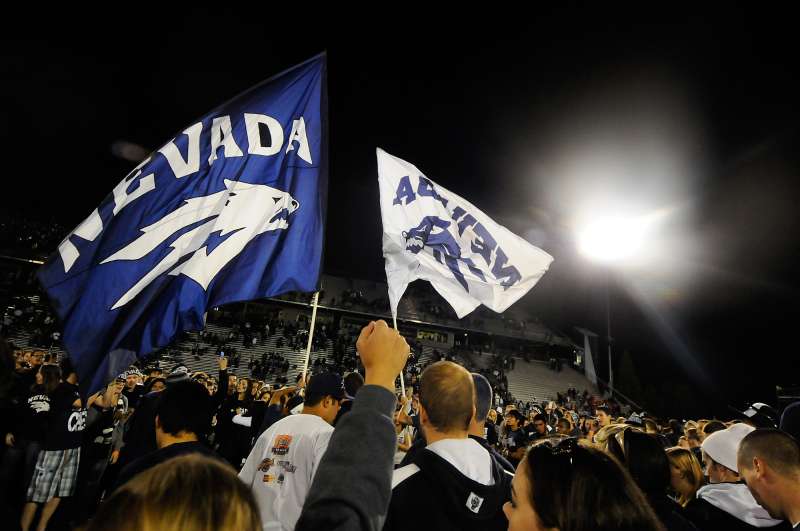
Surveillance company Flock Safety pitched its automated cameras to university police departments across Nevada, attempting to expand its reach onto higher education campuses, officials told The Nevadan.
The University Police Department Southern Command, which oversees the University of Nevada, Las Vegas (UNLV), College of Southern Nevada, Desert Research Institute, and Nevada State University, decided not to pursue the partnership, a UNLV spokesperson told The Nevadan. The Northern Command, however, did initiate the process to purchase six Flock Safety solar-powered pan-tilt-zoom cameras, according to public documents.
Beryl Lipton, senior investigative researcher with the Electronic Frontier Foundation (EFF), a nonprofit defending civil rights in the digital landscape, told The Nevadan on July 28 she’s not “surprised” Flock Safety is attempting to integrate its software onto college campuses, but pointed out that students “still deserve to have a level of privacy.”
“In college, you’re supposed to be able to encounter new ideas, test out new ways of thinking, workshop your intellectual interactions with the world, and to be constantly surveilled in that situation, or to have that data about you collected and handled carelessly, could have repercussions for your life post college,” Lipton said in an interview.
Despite widespread criticism and privacy concerns regarding Flock Safety, about 150 universities and colleges have already implemented Flock surveillance onto campuses, according to Policing and Society.
Flock Safety has received immense pushback nationally for its automated license plate readers (ALPR).
Lipton told The Nevadan that while “not strictly police” agencies—such as homeowners associations—have been adopting the system, the concerns remain the same across the board.
“There are a lot of issues related to the extent to [how] the data is collected, how long it’s retained, how long it’s shared, and then where that information ultimately goes,” Lipton said. “The big problem is privacy.”
She added if a person is surveilled by a Flock camera, then their movements are now searchable “not just by the officers on your campus, but potentially by an extended network of law enforcement agencies.”
Lipton said this is because law enforcement agencies often have relationships with each other—local, state and federal partnerships—where the data could potentially end up in their systems as well.
How Flock Safety nearly expanded to Northern Nevada campuses
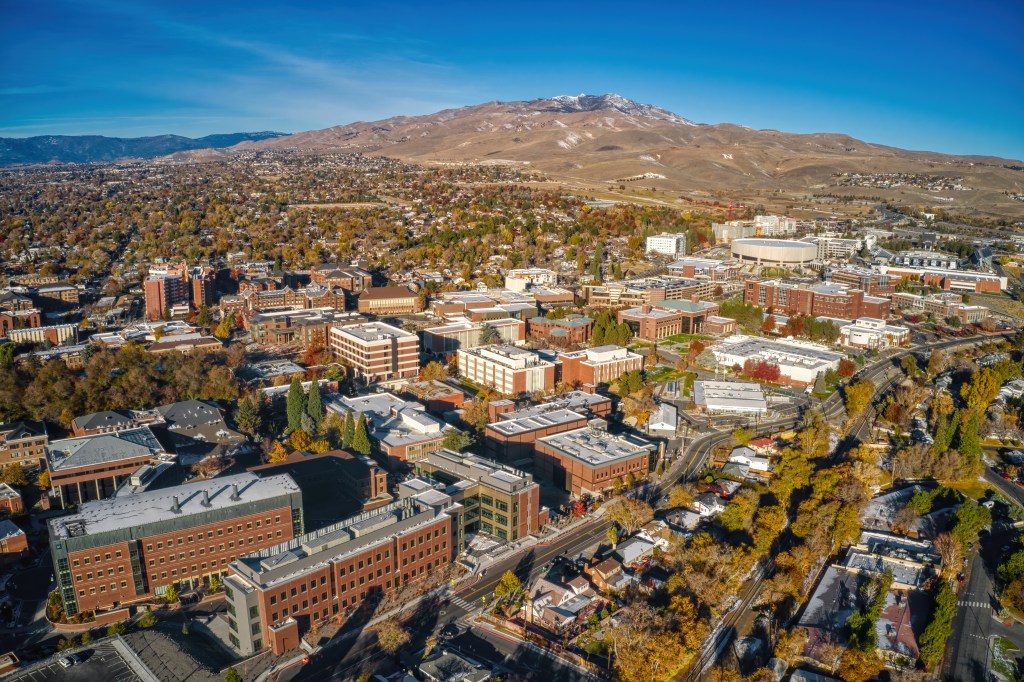
The University Police Department Northern Command—which serves the University of Nevada, Reno, Truckee Meadows Community College, Great Basin College and Western Nevada College—initiated the process to purchase six Flock Safety cameras in 2025 for fiscal year 2026 by applying for grant funding.
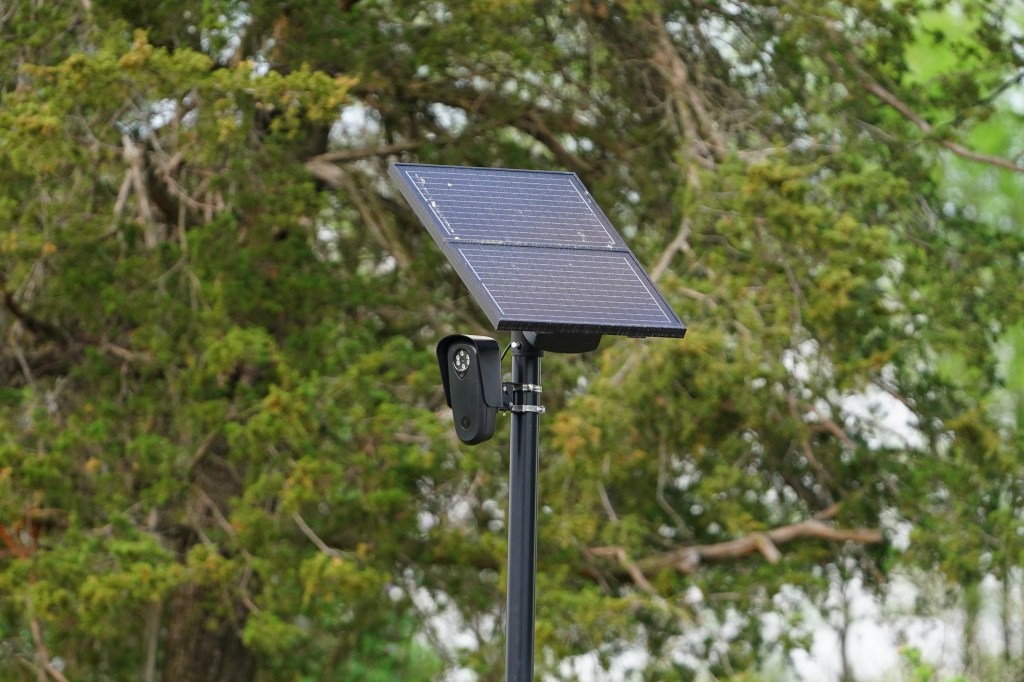
According to the application document, Chief Eric James requested nearly $32,000 from the State of Nevada Emergency Response Commission’s (SERC) United We Stand grant. James wrote the cameras “offer real-time monitoring capabilities, allowing officers to remotely adjust views and zoom in on areas of interest, which is crucial for proactive crime prevention and rapid incident response.”
On May 29, 2025, SERC unanimously approved the expenditure.
Despite the approval, James told The Nevadan they did not go through with the purchase, and instead, bought 13 Avigilon cameras. Avigilon is a Motorola Solutions company that specializes in artificial intelligence analytics. The surveillance software could be integrated into Flock’s application programming interface.
James added the Flock cameras ended up being “too expensive” due to a renewed annual cost. The Northern Command would have to pay the $32,000 every year for the equipment and software.
“We didn’t get to keep the cameras,” James said in an interview with The Nevadan. “That was the weirdest part. If we were to not get another grant for it, basically the cameras [would be] all gone. That made absolutely no sense to me, so we didn’t do it.”
It wasn’t university police who reached out to Flock Safety, James said, it was Flock who reached out to them. The business sent a “generic email” to the Northern Command and pointed out they could purchase the cameras from the United We Stand grant.
James added other companies, such as Axon which has received similar backlash to Flock, also sent “marketing pitch[es]” with grants the state offers and provided language to help draft grant applications.
National backlash and privacy concerns
Nevada isn’t the only place where Flock’s footprint on campuses is under fresh scrutiny. The University of Wisconsin-Madison removed its Flock cameras in July after community pushback. Students, faculty and staff criticized the use of Flock cameras with the worry federal immigration agents could access the data.
On July 3, the university’s police department did not renew its contract with Flock, citing community concerns and a new vendor search.
More recently, Flock has received widespread criticism for authorities in Texas tracking a woman throughout multiple states who allegedly had a self-administered abortion, by using 83,000 Flock cameras spanning across the United States.
Flock CEO Garrett Langley previously described those in opposition to the company as “terrorists,” but has since retracted the statement.
“My comments were a mistake and I apologize,” Langley said. “There are groups today that have real valid criticisms of the business, and I think what’s changed for us is, as we’ve listened to them and heard them out, what we’re trying to do is find this balance. We believe in a world where we can have safety and privacy.”
While Flock is mostly known for its ALPRs, college campuses are often referred to as walkable communities. Though Lipton isn’t “surprised” Flock is integrating its system on school campuses, she pointed out that ultimately, they’re still a business, and are beginning to broaden their system outside of ALPRs.
“They want to sell their cameras to anyone who’s going to buy them,” Lipton said. “Schools are a place that people naturally understand have vulnerable individuals, have students, people they want to be protecting.”
EFF has seen these surveillance companies attempt to make their way into schools, whether it’s college campuses or elementary schools, Lipton continued.
Safety measure or privacy violation?
In the wake of recent controversies revolving around mass surveillance, James added “if you’re in public, there’s no expectation of privacy … anyone can record anything, they don’t need permission. I think in today’s world, everyone expects that.”
Lipton disagrees with James that it’s normalized to expect being surveilled while outside.
“We certainly do not expect that somebody is watching us at all moments that we are not in our [homes]. I hate that it feels like a really lazy way of trying to normalize extensive surveillance,” Lipton said. “[People] at some time in the unknown future could look up information … identifying our pattern of life. That is a lack of privacy that I don’t think we are expecting at the moment.”
James, for his part, said the Avigilon cameras placed around Northern Nevada college campuses do not have facial recognition capabilities, are not integrated in the Flock Safety system, and the footage deletes after “a certain point” due to their retention policies. He emphasized the need for surveillance to enhance campus safety.
“[The Nevada System of Higher Education] as a whole, really [takes] safety to heart and really puts the money to show that they are taking it seriously,” James said. “It makes our job easier when there’s a team effort, especially when it comes to the safety of the students, faculty and staff.”
When asked if the University Police Department Northern Command would revisit Flock Safety, James said “at this point, knowing how much it costs, my short answer is no.”