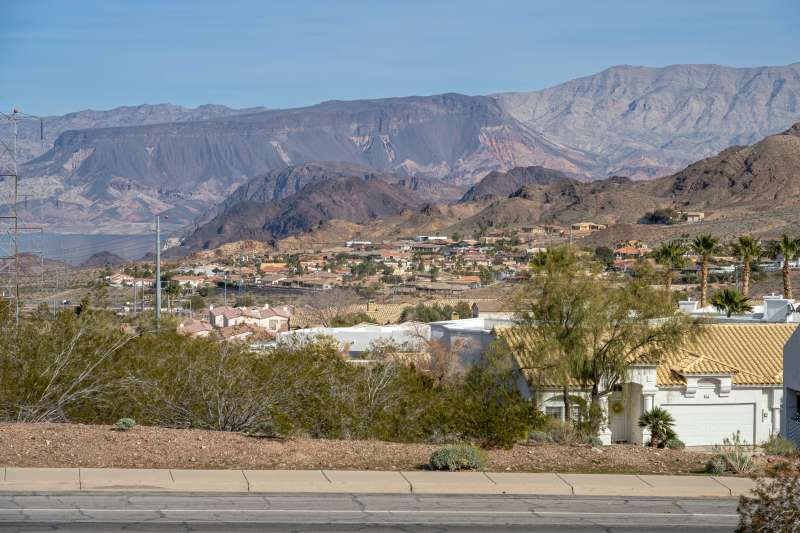
The Trump administration quietly approved a data center on Bureau of Land Management land outside of Boulder City on June 26—a move that advocates worry will allow more data centers to sprout on protected lands.
Residents, advocacy groups, and elected officials have banded together—a rare alliance in data center fights—to challenge the federal government’s approval.
The project was originally approved as a solar facility, and Townsite Solar 2 LLC, the project developer, requested to build a data center instead. The federal government approved the change without a new environmental study or public comment period. Bureau of Land Management officials said the environmental review completed for the original solar project was adequate to cover the data center.
The AI data center sits on 88.5 acres of BLM public land. According to the Center for Western Priorities, the project “could consume more energy than the entire neighboring community of Boulder City.”
On July 14, the Boulder City Council unanimously voted to appeal the federal government’s decision. By July 27, two advocacy groups and residents also filed to appeal the data center.
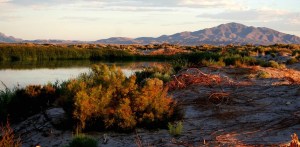
The Sierra Club Toiyabe Chapter (SCTC) and the Center for Biological Diversity pointed out the data center would sit on the banks of the already strained Colorado River that feeds into Lake Mead. Their July 27 appeal to the Interior Board of Land Appeals argues BLM violated federal environmental, land-use and endangered species laws, citing a jump in construction water use—from about 25 acre-feet estimated for the solar project to more than 560 acre-feet for the data center—and risks to desert tortoise habitat.
“Trump is sidestepping the law and shutting the public out of decisions about our public lands. By cutting the public out of the process, they’re trying to hand over Nevada’s desert to billion-dollar tech companies without anyone getting in the way,” said Olivia Tanager, executive director for SCTC.
She added that without a challenge, the project could “become the blueprint” for data centers on public lands across the West. Nevada ranks second in the nation for the most public land, with nearly 88% of the state under federal control.
The political fight over tax breaks
Rep. Dina Titus (D-Nevada) has also questioned the permitting process for the data center. On July 23, she wrote a letter to Republican Gov. Joe Lombardo, asking him to pause all data center tax abatements. She noted that if the project moved forward on land owned by Boulder City, the city would have earned $2.3 million annually in revenue. Now that the data center is on BLM land, all revenue will instead go to the federal government.
“Given the budgetary shortfalls facing our state and local governments in Nevada, this raises questions about why the State tax abatements should be incentivizing the development of data centers on public lands,” Titus wrote.
Nevada Attorney General Aaron Ford—a Democrat running for governor—stopped short on July 27 of endorsing fellow Democrat Titus’ request that Lombardo pause the tax breaks.
On June 10, the day after winning the Democratic primary, Ford said it would be “irresponsible for anyone to make immediate decisions” before reviewing “all of the details and facts,” and has not said whether he still supports the data center tax break program he voted for as a state senator in 2015.
The response highlights how the fight over the Boulder City project is spilling into this year’s governor’s race, where Lombardo, a Republican, has run on data centers as part of Nevada’s economic growth strategy.
She requested a response from Lombardo by Aug. 10, and is also expected to introduce legislation within the next month to address the issue.