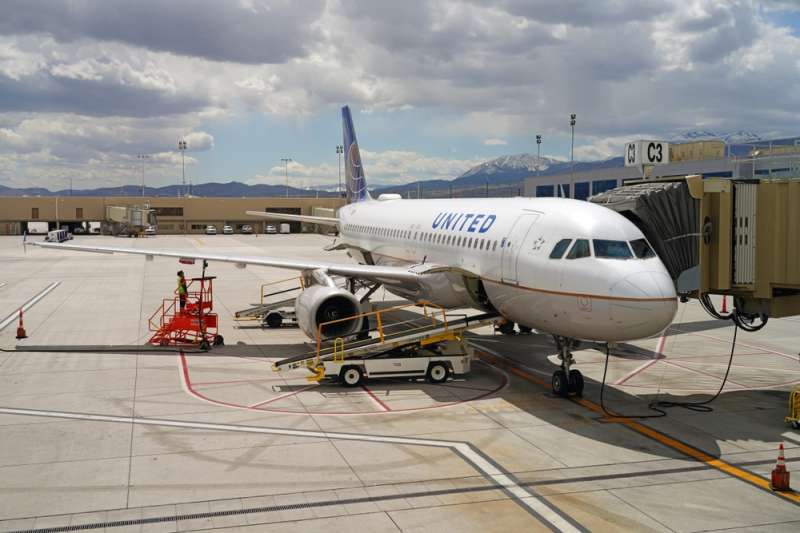
By Jeffrey Meehan, Reno Gazette Journal
As a prolonged Western heat wave pushes Reno above 100 degrees and sends Las Vegas into the mid-110s, airlines are making calculations most passengers never see.
Hot, thin air reduces aircraft performance, sometimes requiring operational changes ranging from fuel adjustments to lighter passenger loads. Travelers heading to hotter destinations across the Southwest could be more likely to encounter those behind-the-scenes adjustments than passengers flying from Reno.
Reno-Tahoe International Airport says travelers are unlikely to experience significant disruptions this weekend.
“We expect minimal to no heat-related impacts on aircraft arriving at or departing from the airport,” Reno-Tahoe Airport Authority spokesperson Jena Esposito said.
The National Weather Service forecasts highs of 101 Saturday, 100 Sunday, a slight cooldown to 98 Monday and a return to 101 degrees Tuesday and Wednesday. Overnight lows are expected to remain in the low to mid-60s, providing limited relief from the daytime heat.
A Heat Advisory remains in effect through Sunday morning for parts of Northern Nevada. Forecasters also expect afternoon wind gusts, elevated fire weather concerns and periods of smoke or haze from nearby wildfires, with patchy smoke possible Friday night.
The science behind hot-weather flying
The National Weather Service’s aviation forecast says hot temperatures will affect density altitude through the weekend.
In general, density altitude refers to conditions where the air is less dense because of higher temperatures, higher elevations or a combination of both. Those conditions can reduce aircraft performance, particularly during takeoff.
“Higher temperatures at higher elevations result in lower air density, which can affect how an aircraft performs during takeoff,” Esposito said.
She added that Reno-Tahoe International Airport’s runways are designed to accommodate the airport’s elevation and local conditions.
“Their length — particularly compared with many other airports — provides aircraft with the necessary distance to accelerate to a safe takeoff speed and achieve the required performance after becoming airborne,” she said.
What airlines do when temperatures soar
Commercial airlines routinely account for weather and airport conditions before every flight.
Southwest Airlines said its dispatchers “factor in all the challenges — temperature, field elevation, winds, runway length, airplane size, loading” when developing flight plans that allow the airline “to operate safely.”
Harry Reid International Airport has the second-longest commercial runway in North America, its website says.
Southwest added, “depending on the location and the temperature, we might lighten the load on airplanes by reducing the number of passengers or limiting the amount of fuel on board.”
On longer flights, Southwest said those adjustments can include making an additional fuel stop instead of departing with more fuel aboard.
The airline added that its aircraft “are certified to fly safely out of hot, high-altitude airfields as long as the airplane is loaded and configured according to Boeing’s performance charts.”
Why Reno isn’t Las Vegas
The heat affecting Reno is part of a broader weather pattern stretching across much of the West, but conditions become more extreme farther south.
While Reno is forecast to reach 100 to 102 degrees through the weekend before a slight cooldown Monday, Las Vegas is under an extreme heat warning through Sunday evening, with highs forecast between 113 and 114 degrees and overnight lows in the mid- to upper 80s.
The National Weather Service says the heat wave will intensify across the Southwest before expanding into parts of the Intermountain West and northern High Plains through the weekend.
Harry Reid International Airport in Las Vegas has a runway length of about 14,500 feet, the second-longest commercial runway in North America. Still, it experienced nearly 600 flight delays during last weekend’s stretch of temperatures above 110 degrees, according to data from FlightAware.
A video posted to X shows an American Airlines gate agent asking for about 50 volunteers to take a later flight. The post says the aircraft needed to depart with a lighter load because of the extreme heat.
Those are the types of operational adjustments airlines sometimes make when temperatures soar.
Airport officials in Reno, however, say this weekend’s forecast is not expected to produce similar disruptions.
“Based on the forecasted conditions, it is unlikely that travelers will experience flight disruptions related to the higher temperatures,” Esposito said.
USA TODAY Network via Reuters Connect