Check out this Google Map to see Nevada’s data centers. Check marks indicate current/active data centers; circles indicate those planned or under construction.
Nevada already uses roughly 10 times as much energy as it produces. Power grids may struggle to meet the rising demand from data centers while balancing the needs of all stakeholders.
That’s according to a recent report from the Desert Research Institute (DRI).
Nevada’s data centers consumed an estimated 22% of the state’s electricity generation capacity in 2024. By 2030, that could exceed 35%.
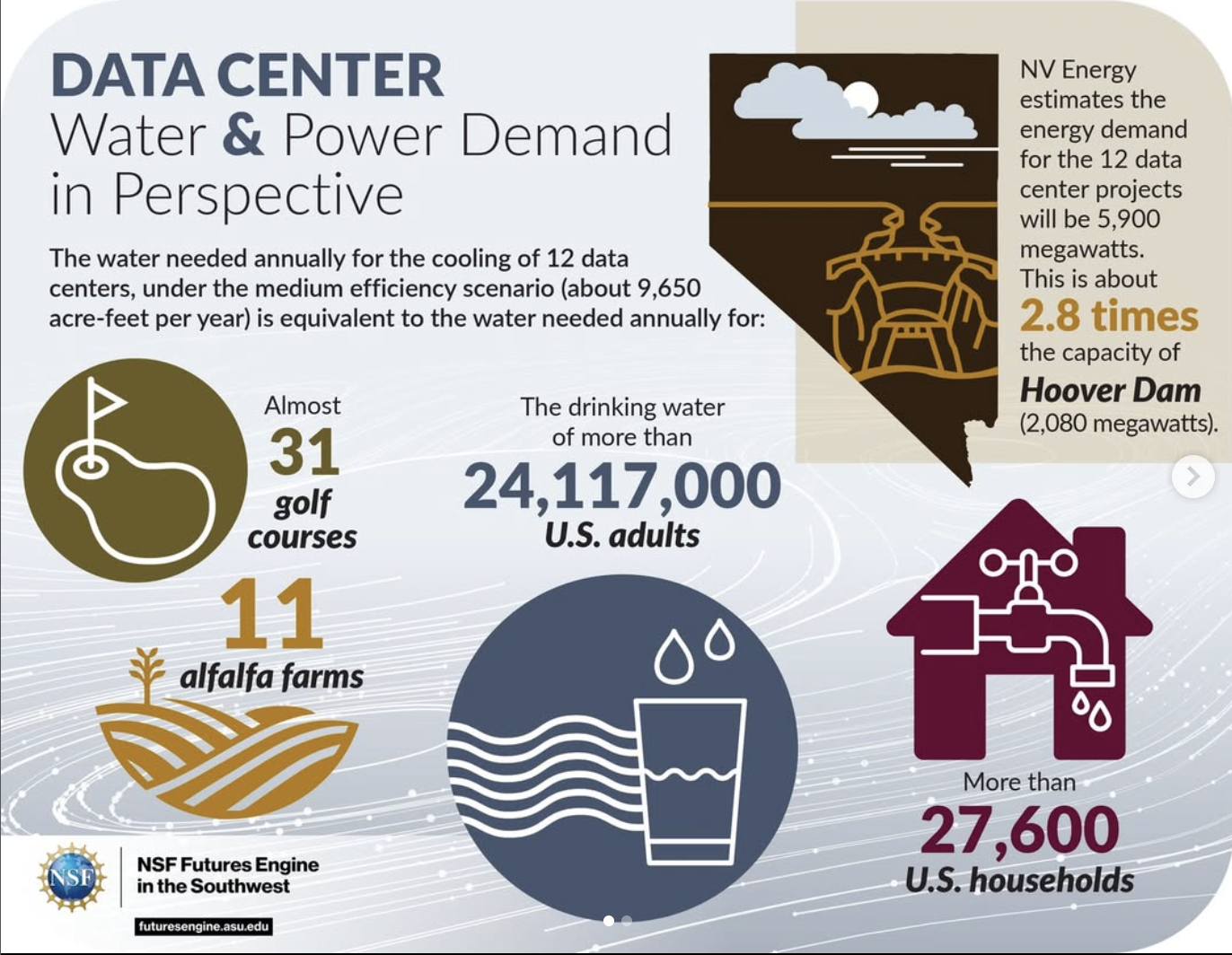
DRI’s report also found that just 12 proposed data center projects could require nearly 5,900 megawatts of power—that’s nearly three times the capacity of Hoover Dam.
To meet this growing electricity demand, the grid will require a new, upgraded infrastructure. That could take years to complete and a considerable capital investment.
If grid growth can’t keep up with demand, local communities could be exposed to power disruptions during heatwaves. Reno and Las Vegas are the fastest-warming cities in the nation. A summer power cut could put residents at risk of exposure to temperatures exceeding 100 degrees.
“Low-income families, seniors, and communities of color often bear the highest energy burden, paying a larger share of their income just to keep the lights on and their homes safe during Nevada’s extreme heat,” said Justin Hopson, an advocate and community organizer with Faith Organizing Alliance, in a statement.
“Energy equity is not just an environmental issue, it is an economic and moral one. Nevada’s regulators must prioritize affordable, clean energy solutions that put people first, not corporate profits or the growing demands of power-hungry data centers.”
Water? That’s a whole other challenge. Although water use by data centers varies according to their size and cooling method, DRI researchers estimate that just 12 facilities could consume nearly 12 billion liters of water annually by 2033.
That’s equivalent to the water use of roughly 31 golf courses a year. Or enough drinking water for more than 24 million adults.
As Nevada becomes a regional center for AI infrastructure, we face a critical challenge: balancing economic growth with the realities of limited water, rising energy demand, and a rapidly changing climate.