The Trump administration is attempting to require visitors from 42 countries to hand over up to five years of social media history before entering the United States. Sens. Jacky Rosen (D-NV) and Catherine Cortez Masto (D-NV) are demanding the proposed rule be tossed out.
US Customs and Border Protection published the proposed rule on Dec. 10, 2025. Rosen and Cortez Masto sent a letter June 2 to Secretary Marco Rubio and Secretary of Homeland Security Markwayne Mullin urging them to withdraw it.
The proposed rule specifically targets travelers from the Visa Waiver Program, which permits citizens of 42 countries to travel to the US for business or tourism for up to 90 days without a visa. The program, in return, allows U.S. citizens to visit those countries for similar lengths of time without visas for similar purposes.
Notable countries include the United Kingdom, Australia, Japan and Ireland.
‘Extreme new requirements’
The letter contends that screening visitors’ social media accounts will reduce tourism to the US. The senators also ask the State Department to reverse its practice of screening social media accounts of non-immigrant visa applicants.
“The extreme new requirements in this NPRM, such as requiring tourists to provide five years of social media information, telephone numbers, physical addresses, and email addresses used over the previous ten years by the applicant, as well as detailed personal information about their immediate family members, threaten to push global travelers away from the US,” the letter states.
It’s not the first time the Nevada delegation has urged the administration to act.
Rosen and Cortez Masto, along with Reps. Steven Horsford (D-NV), Dina Titus (D-NV) and Susie Lee (D-NV) sent a letter to former DHS Secretary Kristi Noem and CBP Commissioner Rodney Scott in January about the matter. The only member of Nevada’s congressional delegation who did not sign the letter was Rep. Mark Amodei (R-NV). Amodei is not running for reelection this year.
“The Department’s proposal would impact nearly every foreign traveler entering the United States and would substantially expand the personal data collected during that process,” the prior letter states.
The letter cited international travel accounts for 12% of visitation and 26% of overall spending in Nevada, warning that “even small declines in international travel would have an outsized and disproportionate impact on Nevada’s economy.”
In the new letter, Rosen and Cortez Masto wrote the timing of the administration’s new rule is “particularly damaging” as the nation prepares for the 2026 FIFA World Cup — which is expected to bring an influx of international visitors to the country.
Current tourism trends
The World Travel and Tourism Council projected the US would be the only economy out of 184 countries to see a decline in international visitor spending in the last year. Despite the projection, the WTTC reported the US remains to be the world’s largest travel and tourism economy despite growth slowing in 2025.
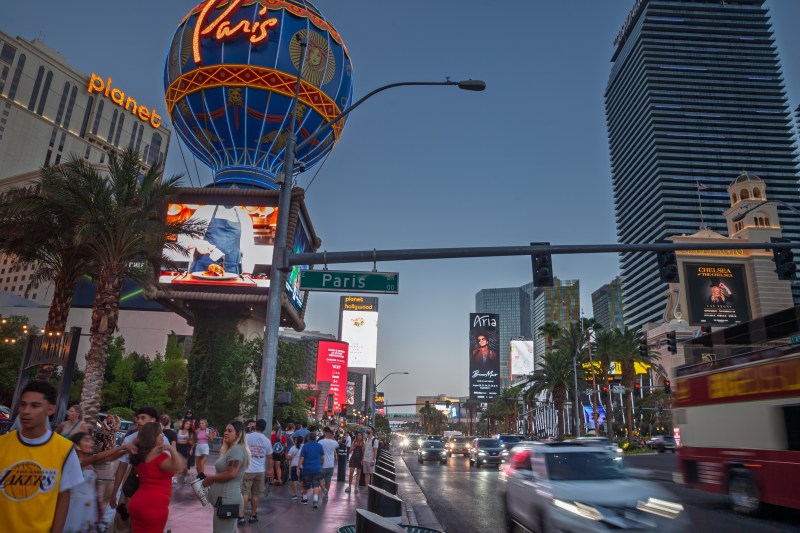
As of April, tourists visiting Las Vegas dropped nearly 2% compared to last year and room nights occupied also fell by nearly 2%, according to the Las Vegas Convention and Visitors Authority. Overall visitation fell nearly 8% in 2025, which the LVCVA attributed in part to fewer international tourists.
The LVCVA added that cautious consumer sentiment and federal policies, such as the proposed social media screening for Visa Waiver travelers, could add friction for international visitors, but Las Vegas is still “well-positioned for a stronger 2026.”
The WTTC, however, warned the proposed ruling could cost the US up to $15.7 billion in lost visitor spending and as many as 4.7 million fewer international arrivals — a roughly 24% drop from the visa waiver countries.
Of the nearly 5,000 international visitors the WTTC surveyed, one-third said they would be less likely to visit the US if the rule takes effect. International visitors were surveyed from Australia, Japan, the United Kingdom, France, Germany, Italy, Spain, South Korea, and the Netherlands.
The job market will also be impacted by less international travel, the WTTC reported. With less international arrivals, 157,000 jobs could be impacted nationwide.
Rosen and Cortez Masto wrote they hope the administration can strengthen security without “creating unnecessary barriers” for international travellers.
“With this in mind, we urge the Department of Homeland Security to withdraw its proposed rule, ask the Department of State to end its practice of screening the social media history of non-immigrant visa applicants, and ask for clarification on the following [questions],” the letter reads.
The two Nevada democrats seek clarification on how social media history will determine whether an application gets denied, what factors are being considered, the denial rate, if the administration has assessed the impact from these policies on international tourism, and if the administration plans to implement these policies ahead of the 2026 World Cup and the 2028 Olympics “in ways that do not unduly burden foreign travelers looking to come to the United States and add to our local economies.”