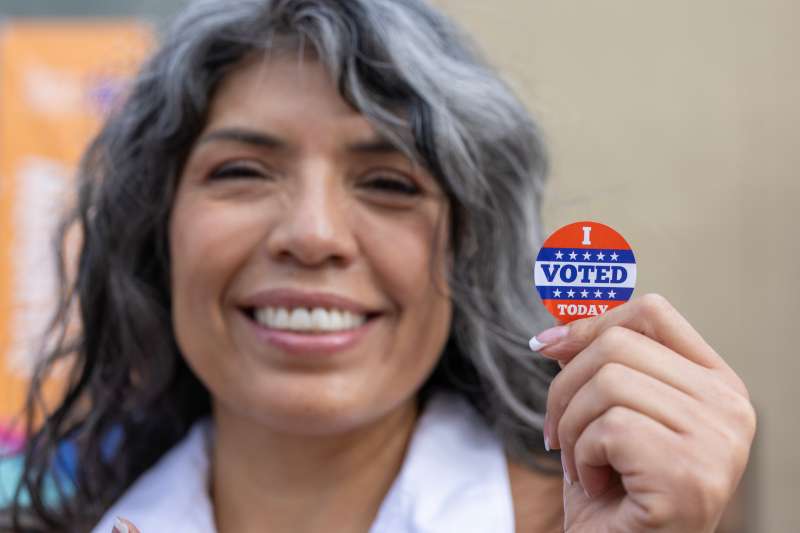
Below, you’ll find The Nevadan’s digestible step-by-step guide for first-time voters. Because we’ve all been there!
Casting your ballot for the first time can seem overwhelming—so many candidates, political advertisements, calls and texts from campaigns, not to mention how divided everything can feel on social media.
But voting is your chance to have a say in who represents you and what happens in your community. Whether you just turned 18, recently moved to the state, or it’s your first time voting because you were previously incarcerated, we got you covered.
Below, you’ll find The Nevadan’s digestible step-by-step guide for first-time voters. Because we’ve all been there!
Important dates:
- Early voting: Oct. 17-Oct. 30.
- Election Day: Nov. 3
It all starts with registering to vote
If you’re a US citizen who meets Nevada’s eligibility requirements—resident of the state and over 18 years old—you can register to vote.
Eligible Nevadans can register online, by mail, through the DMV, or in person on Election Day.
All registered voters will receive a mail-in ballot before early voting begins. If you register to vote when the early voting period has already begun, it’s considered a “same-day” registration so you must vote in person.
Click here to learn how to register to vote in Nevada.
Get informed
The 2026 election is a midterm election, not a presidential election. Nevadans will vote on races including governor, lieutenant governor, attorney general, secretary of state, treasurer, controller, Congress, the state Legislature and various local and judicial offices. Exactly which races appear on your ballot depends on where you live.
You’ll receive a booklet in the mail called a “sample ballot” which shows all the races. You can use this to do research on candidates and make notes for when you fill out your actual ballot. (More on that below)
Voting is not a test. You are encouraged to look things up.
Nevadans will also vote on statewide and local ballot questions. Two constitutional amendments approved by voters in 2024 are scheduled for a second vote in 2026: one concerning reproductive freedom and another concerning voter identification requirements. Constitutional amendments must be approved by voters at two successive elections before taking effect.
Your sample ballot will also show these questions. Check out our coverage on these ballot initiatives here.
Look out for your sample ballot
Before the election, your county will make a sample ballot available showing the candidates, contests and ballot questions that apply to you, along with information about voting locations and procedures.
Think of your sample ballot as a study guide. Use it to research the candidates and questions on your ballot and make notes about your choices.
Yes, you can bring your marked sample ballot or notes with you when you vote.
For the 2026 general election, early voting runs Oct. 17 through Oct. 30. Hours and locations vary by county. On Election Day, Nov. 3, polls are open from 7 a.m. to 7 p.m.
Look out for your mail ballot
Active voters who are registered at least 14 days before Election Day are automatically mailed a ballot unless they have opted out.
If you receive a mail ballot, you can still choose to vote in person during early voting or on Election Day.
If you don’t receive your ballot when you expect it, contact your county election department. You can also check your voter record and ballot status online.
If you vote by mail, your ballot must be postmarked by Election Day, Nov. 3, and received by your county clerk by 5 p.m. on Nov. 7. You can also hand-deliver your ballot to your county clerk or an official ballot drop box before polls close on Election Day.
Click here to learn more about voting by mail in Nevada.
If you vote in person
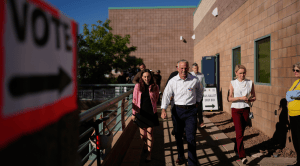
Election Day is Tuesday, Nov. 3, 2026. Polls are open from 7 a.m. to 7 p.m. If you’re in line by 7 p.m., you must be allowed to vote. So stay in line.
Nevada does not require every voter to show a photo ID. However, certain first-time voters who registered by mail or online and have not previously voted in a federal election in Nevada may need to provide identification or qualifying proof of residence. Same-day registrants also must provide a valid form of identification and proof of residence.
Bring your sample ballot or notes if you have them.
Know your rights at the polls
Campaign workers may be outside voting locations, but Nevada law prohibits electioneering in or within 100 feet of the entrance to the voting area while voting is taking place. These campaigners can provide further information on the candidate, or you might meet the candidate themselves.
You may also encounter public observers. Observers can watch the election process, but they must follow rules protecting voters’ privacy and cannot interfere with voting or election workers.
Reminder: You have the right to vote free from intimidation and to ask election workers questions or request assistance. If something doesn’t seem right, ask an election worker or contact your county election department rather than relying on a campaign volunteer or another voter for an answer.
One last thing: Check before you vote
Election information—particularly voting locations and hours—can change. Before you vote, check your registration, review your sample ballot and confirm your voting location with your county election department or the Nevada Secretary of State.
For more information, visit the Nevada Secretary of State’s voter information page.