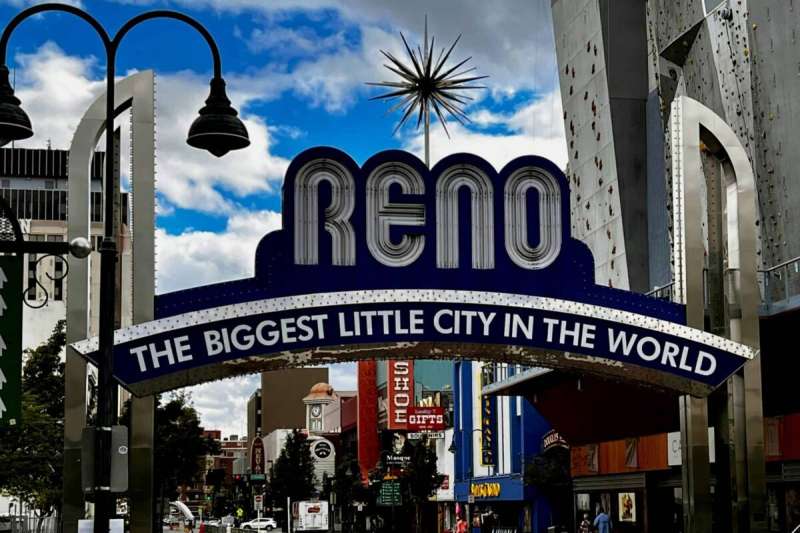
By Brett McGinness, Reno Gazette Journal
The US Census Bureau’s latest estimates put Washoe County’s population at 509,366. By the year 2044, the county’s population is forecast to surpass 600,000.
That’s about 90,000 more people than we have now, a 15% bump from current levels. Nearly all of that population increase will be in Reno-Sparks.
That number isn’t some kind of ambitious target for growth-minded civic boosters, or a dire warning from slow-growth preservationists. That’s the consensus from the most recent Truckee Meadows Regional Plan, which predicts we’ll reach 602,455 residents in about 18 years.
Although forecasts suggest continued population growth, how we manage that growth isn’t yet set in stone. The conversations we have and the choices we make will determine whether these increases enhance the region, or put more strain on our daily lives.
Reno-Sparks, circa 2008
Many of these necessary conversations are ones we’ve had before: housing and homelessness, education and economy, and water capacity in a desert environment.
That being said, a lot can happen in the next 18 years. Just look at where things stood in Reno-Sparks 18 years ago.
Back in 2008, Washoe County’s unemployment rate spiked from 5.2% to 8.7% over the course of the year.
“[In] Washoe and surrounding counties, no major economic drivers appear on the horizon, and gaming is not in expansion mode,” the Reno Gazette Journal noted that February.
Tourism was expected to lead an eventual economic turnaround; the RSCVA’s five-year strategic plan focused on attracting conventions and enhancing the region’s special events schedule. Reno hoped a new Minor League ballpark would help revive its downtown, while Sparks looked to a massive outdoor mall to redefine itself.
And the Reno-Sparks’ housing crisis of 2008? It wasn’t a shortage. The country’s real estate collapse had hit the region especially hard. Apartment vacancy hovered above 7%, and the median single-family home price plunged more than 20% to $270,000—devastating news for homeowners who now owed far more than their home was worth, and for renters who saw their homes foreclosed upon or sold to new landlords.
Nearly two decades later, advanced manufacturing has taken its place among the region’s principal economic drivers after Storey County lured the Tesla-Panasonic Gigafactory.
The rebounding economy brought in 95,000 new residents, about the same amount expected to arrive in the next 18 years. And the housing market fundamentally reset itself from the depths of the Great Recession. Despite massive new developments in Damonte Ranch and Spanish Springs, and infill projects in downtown Reno and around the Sparks Marina, median home prices over the past 18 years have risen to nearly $580,000—a 40% jump, even after accounting for inflation.
Long story short: The opportunities and challenges we’ll face in 2044 may not be the ones we’re anticipating right now.
What does 600,000 actually mean?
Here’s (roughly) what we know we’ll need for 600,000 residents:
Housing: The City of Reno’s housing needs assessment says the city needs another 15,461 housing units by 2035, and that 9,058 of them need to be affordable units. That’s a bump of about 6% above our existing supply of roughly 253,000 units. Extrapolating from the City’s figures, Washoe County would need 40,000 housing units by 2044 to get the region to a healthy 5% vacancy rate, easing our average rents and home prices and putting a dent in the region’s ever-increasing homelessness rate.
Jobs: Washoe County is performing just ahead of national employment figures at the moment—a 4.0% unemployment rate, compared with a 4.1% rate nationwide—and a median household income of $88,096, about 9% higher than the US median. To maintain those competitive numbers, we’re looking at a need for 46,000 more full-time jobs in the area.
Water: The average Washoe County resident uses 166 gallons of water per day (think showers and toilets, dishwashers and washing machines, but also outdoor irrigation). The good news: That’s significantly lower than two decades ago, when we routinely surpassed 200 gallons per person per day. Still, we’re living in a desert, and we’ll need to find another 15 million gallons per day, likely through treatment and recycling, to meet the increased need.
Transit infrastructure: Reno’s average commute time is 20.3 minutes, and Sparks’ is 24 minutes. Both are below the national average of 26.4 minutes, but that better-than-average label is maddening to hear for anyone who’s ever been in standstill rush-hour traffic north of the Spaghetti Bowl, or between Sparks and the Tahoe-Reno Industrial Center. Roadway improvements as well as expanded transit will be part of the conversation, as well as the fundamental question of where future housing is built.
Schools: If demographic trends match current figures, about 15% of new Washoe County residents will be enrolled in K-12 education. That population growth would translate to another 13,000 students. That’s worth a handful of new elementary and middle schools and one new high school.
Health care: According to a recent study, Reno-Sparks has 1.99 hospital beds per 1,000 residents, solidly below the national average. To keep up with population growth and catch up to the national average, that means another 300 beds — perhaps two new hospitals’ worth of capacity.
Predicting the unpredictable
Reno-Sparks residents may disagree on how well we’ve handled growth in the past, but we’ve done all this before.
Now, what’s next? What kind of region do we want to become? How do we keep long-term residents, teachers, medical professionals and the community’s most vulnerable residents from being priced out? What can we do to prevent being stuck in commuter gridlock, and provide the next generation with a quality education?
And what will we do to keep and enhance our unique Reno-Sparks character and social fabric while we absorb new residents?
USA TODAY Network via Reuters Connect