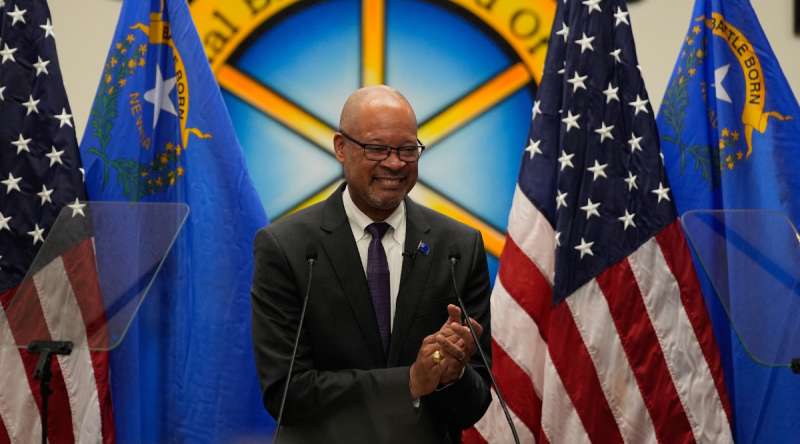
Democratic Gov.-elect Aaron Ford said he is ready to lower costs for Nevadans from the very beginning—giving details on a key promise that helped him oust Republican Gov. Joe Lombardo by nearly 86,000 votes.
Ford, who will take office Jan. 4, pledged to sign bills into law within the first 30 days of the 120-day legislative session. The session begins Feb. 1 and occurs every two years.
“I’ve been working with my colleagues already in the legislature, and we’re gonna sign bills beginning on day one,” Ford said at the National Governors Association’s New Governors Leadership Forum on Nov. 19. “Well, maybe not day one … We’ll be signing bills within the first 30 days to ensure we can start effectuating some of the promises I made on the campaign trail.”
Many of those bills are expected to be new versions of legislation Lombardo vetoed.
Key bills include:
- Free school meals
- Limit the cost of prescription drugs to the Medicare-negotiated price for everyone
- Limit corporations from buying homes
Ford said these are “concrete” policies to immediately lower costs for Nevadans. He and the Democratic majority in the state legislature will have an $13.4 billion budget, an 8% increase from the previous two-year budget.
Ford acknowledged the state may need to allocate more funds to support healthcare, as the Trump administration continues to limit federal coverage and reimbursement to states. That could stall some of the promises he made on the campaign trail.
About 46% of the state’s recent budget went to healthcare.
Additional affordability promises
Ford also pledged to declare a state of emergency on affordability. Ford hasn’t given specifics of what the declaration entails, but said his general counsel will ensure all state agencies are instructed to find ways to “put money back in people’s pockets.”
“You hear people signing executive orders to make things easier for businesses, cut regulations and make it easy to do business,” Ford said at the forum. “… But if you could do it for businesses, you could do it for people.”
In addition to lowering costs, Ford also pledged to support unions. He wants to repeal the state’s “right-to-work” law and force the Nevada System of Higher Education Board of Regents to recognize the graduate student union as a collective bargaining committee.
Repealing right-to-work, Ford said, will strengthen a union’s ability to bargain for better wages and benefits.
The state’s Board of Regents told student workers in 2024 it would not recognize their union until the Nevada Legislature does. The graduate student union, AWN-UAW, had two unsuccessful attempts during the 2023 and 2025 legislative sessions.
Ford will submit his budget Jan. 18, which will outline legislative priorities and give Nevadans a glimpse on which campaign promises he will fulfill first.