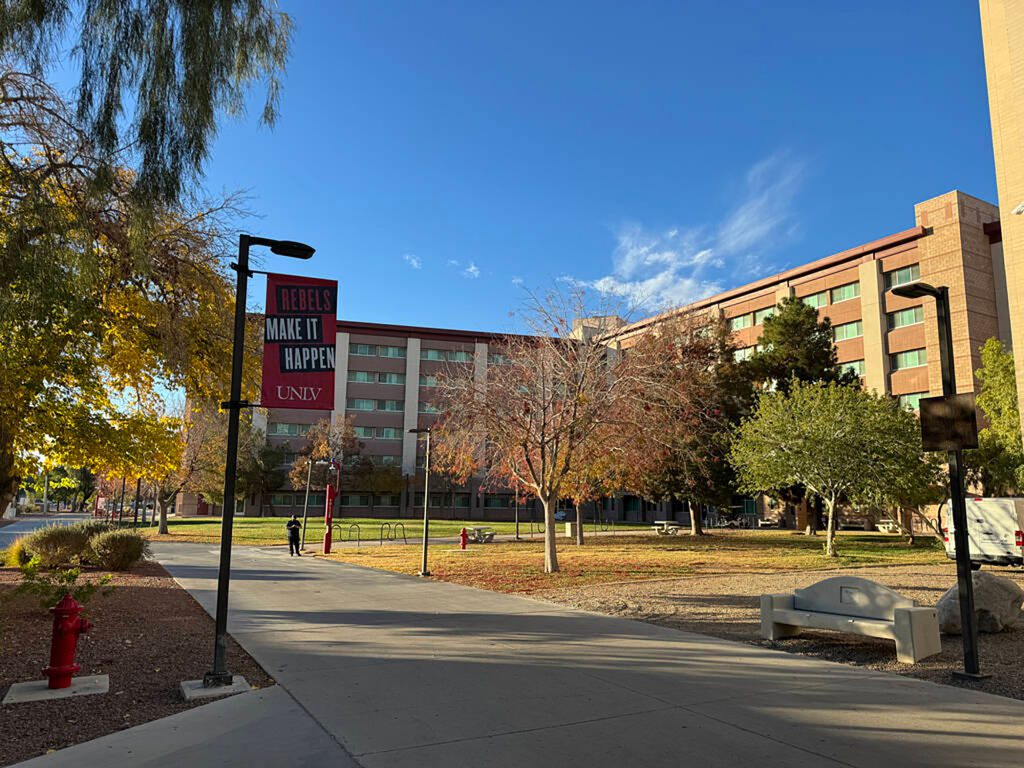
(K.M. Cannon/Las Vegas Review-Journal/Tribune News Service via Getty Images)
By Jeffrey Meehan, Reno Gazette Journal
The Nevada System of Higher Education Board of Regents approved a multi-year tuition and fee increase plan during its Jan. 23 meeting, that officials say is needed to avoid layoffs and service cuts as temporary state funding expires.
The increases would take effect beginning in fall 2026 and phase in through the 2028–29 school year, including for the University of Nevada, Reno and University of Nevada, Las Vegas.
The plan is tied to the expiration of state “bridge funding” approved by lawmakers during the 2025 legislative session to help cover ongoing costs tied to cost-of-living raises in 2023 and 2024. That funding ends in 2027.
Regents say the bridge funds were intended as a short-term stabilizer, not a permanent revenue source. Without a replacement, NSHE projects significant budget gaps across its campuses that could lead to layoffs and reductions in student services. Regents will also review alternative scenarios.
What the tuition plan would do at Nevada colleges
Under the recommended plan, tuition and registration fees would rise gradually over three years, in addition to inflation-based adjustments already approved.
For UNLV, UNR and Nevada State University, the additional increases would be 3% in the 2026-27 academic year, 4% in 2027-28 and 5% in 2028-29. Community college lower-division courses would see smaller increases of 2%, 3% and 4% over the same period.
Regents say the increases are intended to maintain current staffing levels, academic programs and student services.
Under the plan, by the 2028-29 academic year, the additional cost for full-time Nevada residents would be about:
- $1,200 per year for UNLV and UNR students
- $900 per year for Nevada State University students
- $400 per year for community college lower-division students
The increases would not apply to dual-enrollment students, typically high school students earning college credit, or to professional programs at UNLV and UNR.
If tuition had remained unchanged and the bridge funding expired, NSHE projects a shortfall of nearly $50 million. In that scenario, about 300 positions and current services would be at risk across Nevada’s public colleges and universities, according to system briefing materials.
Tuition scenarios under review
Increases include estimates for four-year institutions.
- Full plan: 12% tuition increase; phased in through 2028-29; about 317 jobs preserved.
- Smaller increases: 8% increase; $17.2 million shortfall; about 102 jobs cut.
- Minimal increases: 4% increase; $33.4 million shortfall; about 206 jobs at risk.
- No increase: $49.4 million shortfall; about 317 jobs and services at risk.
USA TODAY Network via Reuters Connect


El CSN da la bienvenida al Dr. William L. Kibler como presidente interino
El Dr. Kibler aporta una gran experiencia a su nuevo puesto, estará al frente del colegio comunitario más grande del estado mientras se encuentra un...

“Cantan las golondrinas” al Dr. Federico Zaragoza en Il Toro e La Capra
Amigos, funcionarios y personalidades del ámbito educativo despidieron al Dr. Federico Zaragoza, quien no renovó su contrato como presidente del...

New affordable housing community for seniors to open in Las Vegas
Hundreds of millions of dollars are being invested and awarded to help address the affordable housing crisis in southern Nevada, but the state still...

Video: Sen. Jacky Rosen introduces bill to lower costs for first-time Nevada homebuyers

Video: Lombardo tries to pin housing woes on Biden after vetoing bills and naming ex-housing lobbyist as chief of staff

Biden cancels student loan debt for 3,020 more Nevadans
The Biden administration on Friday announced its cancellation of an additional $7.4 billion in student debt for 277,000 borrowers, including 3,020...