
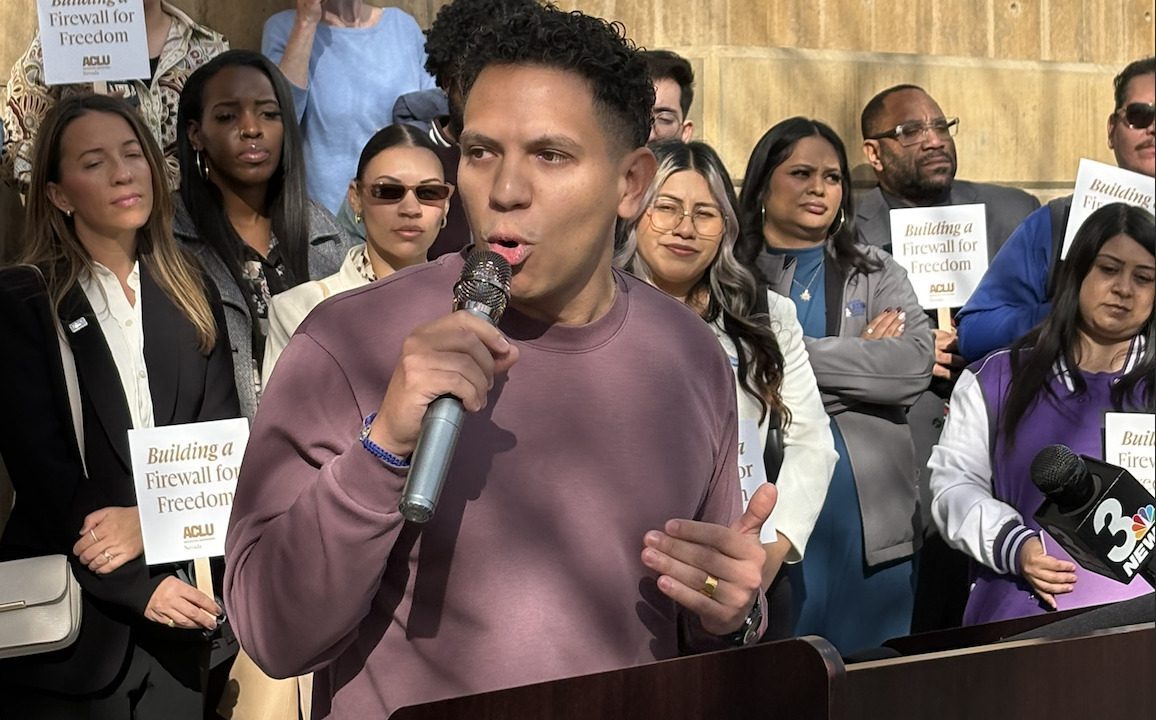
A photo of Miguel Dávila Uzcátegui that he supplied to The Nevadan-El Nevadense.
Candidate for Nevada Assembly says Trump’s removal of Venezuelan President threatens greater authoritarianism in his home country. Another backs the intervention.
Earlier this month, at the command of President Donald Trump, the US military forcibly removed Venezuelan President Nicolás Maduro from power. He now awaits trial in federal custody on American soil for narcoterrorism.
Reuters reported that the US mission to detain Maduro resulted in more than 100 dead, including civilians. It was carried out by bombing the capital city of Caracas and the surrounding area.
The action drew the ire of Democrats, who called it an act of war and said Congress should have been consulted. For Venezuelans in Nevada, Trump’s decision is far more nuanced.
Local nurse Rosemary Rivas, 42, fled Venezuela to the US in 2019. She hopes the Trump administration will take further action.
“What I hope is that they can continue to remove the other people there,” she said.
Despite his removal, Maduro’s cabinet is still in place, which Rivas finds concerning.
When she fled, she felt that authoritarian regimes dramatically reshaped her quality of life, going from free health care and education to far-reaching devastation and state-sanctioned violence that left “the next generation” shot up in the streets. She said the changes happened in a matter of decades, and they included stolen elections, starvation, and disarming police, which made way for a paid, armed militia to control the nation under dictatorship.
Despite Maduro’s long-standing reputation as a violent authoritarian, his capture triggered political backlash abroad and at home—including from top Nevada Democrat US Sen. Catherine Cortez Masto.
She told The Nevadan-El Nevadense that while she is glad the “brutal dictator” is out of office, she remains critical of Trump’s process. She also claimed the Venezuela mission went against what Americans “want to see.”
“Donald Trump should be focused on lowering costs here at home,” wrote Cortez Masto, a member of the Senate Finance Committee, in a statement. “Not ‘running’ Venezuela or controlling its oil exports.”
Amid the chaos, Trump announced that he plans to “run Venezuela” and control its biggest resource—oil—offering reimbursements, paid by taxpayers, to fossil fuel companies that move to Venezuela and build gas infrastructure. Moving in on the Trump administration’s plans to take over the Venezuelan oil industry, as of last week, US forces have seized six foreign oil tankers since Maduro was removed from power.
Meanwhile, the country’s oil reserve, which is estimated to be the largest in the world, is currently only minimally tapped. However, Venezuelans have experienced widespread suffering, including steep barriers to education and health care and rising inflation. That’s against the backdrop of 82% of the population living in poverty, with 53% experiencing extreme poverty, according to a 2024 United Nations press release.
When it comes to the US-Venezuela situation, Rivas said she is all in behind Trump’s plan, backing his desire to help the country navigate the global oil market.
“I’m really grateful for what the United States is doing,” Rivas said. “Because we were knocking doors around the world … we never received a response.”
However, it’s unclear what Trump intends to do long term regarding the Venezuelan government and the country’s right to self-rule. Instead, he has focused on what the US is owed for ousting Maduro without divulging a specific plan. It appears to be in line with his recent claims about expanding US influence outside American borders.
Trump has threatened military action against several other nations, including Colombia, Canada, Mexico, and Iran, reports The New York Times, with Greenland still a target but recently excluded from forceful measures.
Venezuelans are split on US intervention
Las Vegas city planner Miguel Dávila Uzcátegui, a Venezuela-born candidate challenging Democrat Howard Watts III in Assembly District 15, supports Maduro’s removal, but he fears that it’ll only worsen authoritarian conditions in his home country.
District 15 mainly covers central Las Vegas, a region that has a larger Hispanic and Latino population–37% compared to 29% statewide, according to a 2025 report—and marks foreign policy toward Latin America as a critical issue.
Dávila Uzcátegui said based on his friend’s account back home, the US intervention has become a political flashpoint on the ground, with people being subject to scrutiny by “pseudo-officers and facing arrest if they support the intervention.”
“I don’t have any faith that somebody who is committed to consolidating more power for himself and his friends, like Donald Trump … that he’s committed to transitioning a country like Venezuela into a democracy,” Dávila Uzcátegui said.
He fled Venezuela in 2006, which, according to him, could bring about a drastically different perspective from those who never left. He thinks most who couldn’t flee lean towards skepticism of Trump’s motives, while those who could bend more towards optimism.
“It’s not just an authoritarian government … trying to keep everyday people away from those decisions that deeply impact their lives,” Dávila Uzcátegui said. “Now, they’re actually doing that in cahoots with a foreign power who’s more interested in … seizing oil assets than actually promoting democracy.”
Republicans flip-flop on oversight
On top of pushing back on Trump’s expansionist policies, Democrats challenged the White House’s authority to invade Venezuela, arguing that the military operation lacked congressional support and knowledge. For opposers, the escalation signals a broader push to expand US control in other countries, which has drawn criticism from both sides of the aisle.
Still, that didn’t stop Republicans from clearing a path for the Trump administration to proceed militarily without oversight.
Last week, Senate Republicans blocked a wartime resolution that would have required White House officials to obtain congressional approval for future actions against Venezuela. That was after GOP Sens. Josh Hawley (R-MO) and Todd Young (R-IN) supported the legislation, but were swayed toward opposition when pressured by the White House, NBC News reported.
This comes as the executive branch maintains it can independently launch limited military actions without Congress—even if they violate international law—as long as officials deem them in the country’s best interests and differentiate them from war, according to Brookings, a nonpartisan research and policy institute.
But it wasn’t just the military actions questioned by officials on Capitol Hill. Lawmakers are also concerned about the quarantine on Venezuelan oil, which followed a series of US airstrikes on Caribbean boats.
Trump has already foreshadowed plans to delay Venezuela’s legally-required snap election, which mandates a presidential vote occur within 30 days of a president’s removal from office. Trump, who met with Maduro’s main opposition leader María Corina Machado last week, argued in an interview with NBC News that the US must “fix” Venezuela before an election can take place. He’s also reportedly requested to take over the country’s oil economy.
While Dávila Uzcátegui questions the outcome, stating he doesn’t “see a sign of goodwill” from Trump or oil companies, Rivas supports the US laying down economic roots in her home country and is especially hopeful about a new way forward regarding Venezuelan oil reserves.
“We only need a good and fair conversation about how we’re going to administer the money, is the only worry,” she said.
This story was updated at 10: 20 PM on January 21, 2026, to accurately reflect Miguel Dávila Uzcátegui’s perspective on support for Trump.


Opinion: The cost of Trump’s economic chaos is being paid by Nevadans
Our state is no stranger to extreme heat, which is only getting worse with climate change. Las Vegas and Reno are two of the fastest-warming cities...
Los primeros 100 días de Trump en el cargo han dejado a estos nevadenses “aterrados”
En una mesa redonda la semana pasada, trabajadores del servicio público suplicaron ayuda a los demócratas de Nevada, afirmando que la agenda...
Trump’s first 100 days in office have left these Nevadans ‘frightened’
At a roundtable last week, public service workers pleaded for help from Nevada Democrats, stating that Trump’s economic agenda threatens social...

Trump appoints Chattah Nevada’s interim U.S. Attorney
By Dana Gentry, Nevada Current Nevada Republican National Committeewoman and former political candidate Sigal Chattah has been nominated by...

Trump administration plans to cut 80,000 employees from Veterans Affairs, according to internal memo
“What’s going to happen is VA’s not going to perform as well for veterans, and veterans are going to get harmed,” said Michael Missal, who was the...

Nevada part of multistate lawsuit seeking injunction against Elon Musk
Plaintiffs say Trump needed Congressional authorization to create the agency now known as DOGE, and that Musk needed to be confirmed by the US...


