

Source: Shutterstock
By January 2026, Nevadans covered under the Affordable Care Act (ACA), may see their health care premiums jump by 26%.
But for many Nevadans, like Kristine Schachinger, health care has never been affordable, and an end to ACA subsidies will only cause costs to go up further.
Schachinger is a Las Vegas resident and consultant who works in digital marketing. As an independent contractor, employer-based health insurance has never been consistently available to her. The ACA, as a result, has been her solution.
Passed by former President Barack Obama in 2010, the ACA has helped millions of Americans gain health insurance—but ever since it became law, Republicans have attempted to dismantle, repeal, and replace it.
In 2021, Congress raised existing Affordable Care Act (ACA) subsidies (relief) in the form of tax credits under the Biden administration, but they are set to expire at the end of this year.
Amid the attempted passage of a continuing budget resolution, the extension of those subsidies landed at the center of negotiations in the nation’s capitol—leading to the longest shutdown in US history.
The loss of subsidies, however, likely will be the reason Nevadans see huge jumps in health care costs.
The health care subsidies are only available by plans sold on Nevada Health Link, which is Nevada’s official health insurance marketplace. As of 2025, records show that more than 110,000 Nevadans enrolled in health coverage through the marketplace.
Health policy and research organization KFF estimates the loss of the enhanced ACA subsidies could lead more than 24,000 Nevadans to lose insurance by 2034.
Schachinger has medical conditions that run in her family, and going without health insurance has never been an option for her. She lives with restrictive cardiomyopathy, among other health complications such as type-2 diabetes and two autoimmune disorders.
The prognosis for Schachinger’s restrictive cardiomyopathy without medication is five years.
“I’ve been alive…because of medication and good doctors,” she said.
Her insurance costs have always been between $300 and over $1,000 a month, generally climbing in costs as years have passed.
But for the last five years, Schachinger has paid $15,000 to $25,000 a year in basic medical costs, between insurance premiums, co-pays, urgent care visits, and other out of pocket costs.
By January 2026, Schachinger’s monthly healthcare premium will reach over $1,300, the highest it’s ever been, and she doesn’t even have a top plan in the ACA marketplace.
“I’m paying a mortgage, basically, or rent for health insurance that I can’t not have, because if I don’t have it, my conditions would kill me,” Schachinger said. “I just would like to spend 20,000 a year on something else—it would be better for the economy if I could spend 20,000 a year on something else.”
Already, Schachinger has had to jump through hoops to get medical care. Prior to being covered by the ACA, a year after it became law, she switched between doctors and methods of filling prescriptions.
Every January, Schachinger has a $600 deductible on one of her diabetes medications—last January, she wasn’t able to pay, and had to wait a month to get it. Sometimes, Schachinger has traveled to Mexico to get medications at lower prices than in the US.
“So if my insurance, when I open it up, goes to $2,000 a month, I will have to find a way to come up with $2,000 a month, because I cannot afford the medications to keep me alive without ACA, it covers me,” Schachinger said.
Schachinger drives a 20 year old car with over 200,000 miles on it, and it’s long past time to replace it, but with her medical costs, that’s just not possible.
“You can’t get ahead, I can’t buy a house or buy a new car because I’m spending all this money every month on just medical and ACA,” Schachinger said. “A problem nowadays is you have to have two incomes to do extra things in life, or you have to make enough that equals two incomes.”
Nevada Senators caved to Republican’s demands on health care
Democrats across the US made extending the ACA subsidies the center of their negotiations to end the federal government shutdown.
But, a handful of Democratic lawmakers, including Nevada Sens. Rosen, and Cortez Masto, voted to re-open the government this month without a codified deal to extend ACA subsidies.
People needed to see their Democrats fighting for them, and Sens. Rosen, Cortez Masto are from a generation of politics where being reasonable and sometimes admitting defeat is the right thing, Schachinger said. “But in this case, people needed them to fight.”
“I just think, unfortunately, they’re just very out of touch with what mood the country is in right now and what people needed them to do right now, and it wasn’t to capitulate last night,” Schachinger said.
READ MORE: Nevadan moms worry about health care access for their families amid Republican cuts


It’s 2026 and you’re uninsured. Now what?
By Renuka Rayasam Health policy changes in Washington will ripple through the country, resulting in millions of Americans losing their Medicaid or...

Estados Unidos podría perder su estatus de país libre de sarampión
By Amy Maxmen Luego de un año de brotes continuos de sarampión que han enfermado a más de 2.400 personas, Estados Unidos está a punto de perder su...

Las enfermedades y muertes que previenen las vacunas que los CDC han dejado de recomendar
Recibe noticias en español directo a tu correo electrónico (email), suscríbete a Vegas Somos. Por Arthur Allen and Jackie Fortiér El gobierno...
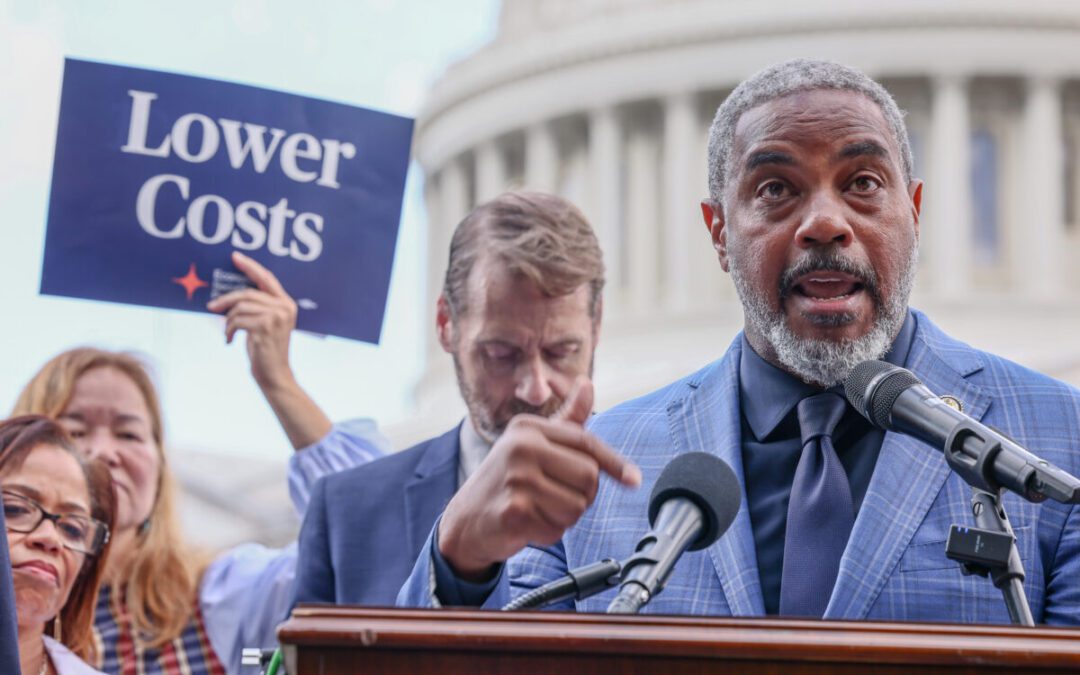
Nevada Democrats push ahead, but ACA tax credit extension unlikely to pass
Despite Republicans in the House defecting to pass subsidy extensions, healthcare credit renewal and relief may be dead in the water. The Breaking...

Se acerca el cierre de la inscripción en Nevada Health Link
Por Suzanne Potter Quedan pocos días para inscribirse en un plan de salud a través de Nevada Health Link, el mercado de seguros del estado bajo la...

Consejos contradictorios sobre las vacunas contra covid podrían afectar las tasas de vacunación, que ya son bajas
Por Phillip Reese, KFF Health News Más de tres cuartas partes de los adultos en Estados Unidos no se vacunaron contra covid la temporada pasada y...


