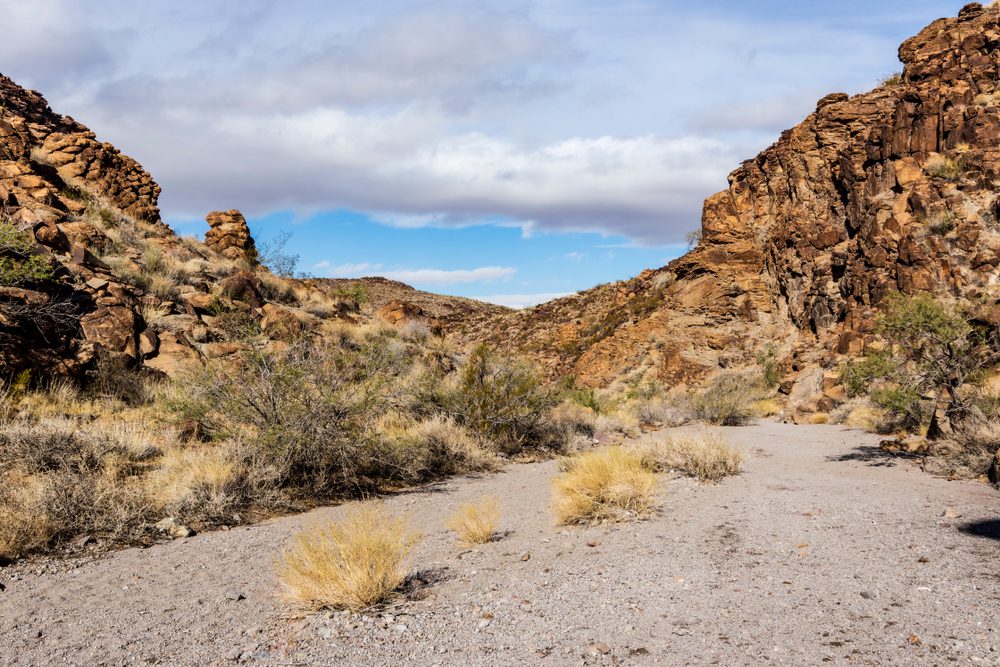
This funding’s aim is to help connect the estimated 8.5 million families and small businesses nationwide that still haven’t been able to access the full capabilities of modern technology. (Photo via Shutterstock)
It’s been said that high-speed internet is the electricity of the 21st century—with it, amazing things are possible, but without it, families and communities can miss out on crucial economic opportunities, experience worse educational outcomes, receive worse health care outcomes, and become increasingly isolated from the connected world. And yet, today, in 2023, hundreds of thousands of Nevadans and tens of millions of Americans lack access to high-speed internet.
On Monday, the Biden administration took significant steps to connect many of those individuals, announcing more than $42 billion in funding to expand internet access across the United States with the goal of connecting 8.5 million families and small businesses to high-speed internet.
The funds come from President Biden’s Infrastructure Law, which passed in bipartisan fashion in 2021. Nevada is set to receive $416 million through this investment. The funding effort is part of the White House’s larger goal of ensuring that fast and reliable broadband internet will be accessible to all corners of the country by 2030. Speaking at the White House on Monday, Biden himself compared this latest investment to the federal government’s work to electrify America’s heartland in the 1930s, when nearly 90% of farms had no electric power due to high costs and “prohibitive terrain.”
Biden said that rural communities now suffer from a similar disparity: “the digital divide.” This is the gap between those that have high-speed internet access and those that do not. Nationwide, new federal estimates indicate that roughly 7% of the United States does not have broadband access that meets the government’s minimum standards.
The true rate may be even higher, however, as it is notoriously difficult to identify communities, individuals, and businesses that lack access to broadband.
The federal government has spent tens of billions of dollars over the years to expand broadband, but the effort gained new steam during the COVID-19 pandemic, which showed us just how vital the internet is for Americans’ daily lives–to boost small business, to get virtual medical care, to contact coworkers and family members, and to have groceries delivered, among other things.
“It’s the biggest investment in high-speed internet ever, because for today’s economy to work for everyone, internet access is just as important as electricity or water or other basic services,” Biden said.
The $42.5 billion is being funded via the Broadband Equity Access and Deployment Program, known as BEAD, which was created as part of the infrastructure law.
States will be tasked with devising blueprints for how exactly to connect the citizens in their respective areas. The White House states that if any funds are left over, they are to be used for improving internet connectivity for those with slower access. The amount of money allocated to each state was determined by the total number of unserved homes, businesses, and other locations within each state.
In May, Nevada Democratic Sen. Jacky Rosen pushed the Federal Communications Commission (FCC) to update its national broadband map because she said it did not accurately reflect the state’s high-speed internet coverage. This, Rosen argued at the time, could have affected the amount of funding the state received.
The new map identified about 27,000 new broadband serviceable locations, as well as 7,000 new locations that do not have access to high-speed service, according to Sen. Rosen’s office.
“Internet connectivity is essential for Nevadans’ daily lives, and I’ve made it one of my top priorities to ensure every household in our state has access to high-speed internet,” Sen. Rosen told the Las Vegas Review-Journal in a statement last month. “As a result of these successful efforts, I have secured $416 million to connect more Nevadans across our state to high-speed internet.”


Cómo es la nueva pirámide nutricional y qué dicen los expertos
“Comida real”: qué cambios trae la nueva pirámide nutricional recomendada por Estados Unidos y qué dicen los expertos Si tienes sólo unos segundos,...

Que saber sobre los ataques de Estados Unidos e Israel a Irán
Por Jonnathan Pulla Estados Unidos e Israel coordinaron ataques a Irán el sábado 28 de febrero de 2026 en una operación denominada operación Furia...
Southern Nevada water pipeline bill passes U.S. Senate, headed to president’s desk
By Jeniffer Solis, Nevada Current A proposed water pipeline project that would tunnel under the Sloan Canyon National Conservation Area is one step...

Tips, resources, & funding opportunities for Nevada’s women entrepreneurs
If you’re a woman who wants to open a business in Nevada, you’re in luck. The Silver State is rich in resources to support you along your journey....

Here’s what tips and workers qualify for ‘No Tax on Tips’ law in 2026
By Mark Robison, Reno Gazette Journal Tax returns filed in 2026 will be the first with President Donald Trump’s “No Tax on Tips” policy in effect —...
Rep. Mark Amodei, a Nevada Republican, announces retirement from House
By Mark Robison, Reno Gazette Journal Nevada Rep. Mark Amodei announced Friday he's retiring from Congress. He's one of two dozen members of the...