As election controversies ramp up ahead of the 2026 election, Nevada Secretary of State Cisco Aguilar has assured voters that Nevada runs safe, secure and accessible elections — despite federal efforts to undermine how states run elections and certify results.
President Donald Trump’s Department of Justice (DOJ) sued several states, including Nevada, to obtain voter roll data, including driver’s license numbers, home addresses and partial social security numbers. The American Civil Liberties Union (ACLU) called this move an “effort to build a national voter database without congressional authorization.”
The ACLU accused the DOJ of “improperly” questioning the validity of state voter rolls in order to intimidate voters in Nevada.
Two months after the DOJ sued Nevada, Trump called for the Republican Party to “take over” and “nationalize” elections in 15 states ahead of the midterms. While it’s not clear which specific states he was referring to, Trump’s legal and campaign teams directed Nevada Republicans to submit fake Nevada electoral certificates to Congress in 2020 after Joe Biden won Nevada.
Despite the Trump administration’s attempts to cast doubt on elections nationwide, Aguilar has worked to ensure elections are safe, secure and accessible in the Silver State.
Aguilar, an attorney, emphasized the US Constitution says states have the responsibility to run their own elections, not the federal government.
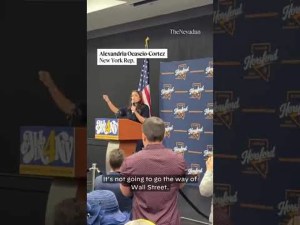
“As secretary of state, it’s my job to ensure that every eligible Nevada has access to the ballot box,” Aguilar said at a Aug. 12 meeting with the Third Act. “Nevada has run some of the safest, most secure, and accessible elections in the country, but we don’t have to jeopardize safety and security for accessibility. We can continue to do all of them at the same time.”
How safe elections are run in Nevada
State election officials performed voter roll maintenance ahead of the election earlier this year. The maintenance checks were led by county election officials as part of a legal mandate to prevent voter fraud.
The National Voter Registration Act sets strict requirements for maintaining voter rolls. During maintenance, voters are flagged to confirm or update their residential address, or inform the county if they’ve moved.
Nevada ranks second in the nation for election administration, meaning the Silver State leads in the nation for safe, secure and accessible elections, according to the MIT Election Performance Index.
As Trump casts doubt on election administration, Aguilar reaffirmed his office has implemented new statewide voter registration and an election management system. This is to increase security and transparency in “every step of the election process,” Aguilar said.
Every county in Nevada also uses voting machines — which are proven to be less error-prone than hand counting ballots — to allow voters to print their ballots and review responses before submitting them for tabulation. The voting machines are not connected to the internet, meaning they can’t be hacked.
“All of these efforts and more enhance the security of the system and increase voter confidence while maintaining accessibility for all Nevada’s eligible voters,” Aguilar said.
Elections in Nevada are administered by local election officials. The secretary emphasized there are numerous protections to prevent noncitizens from voting, including rigorous testing and certification requirements. Aguilar added claims of election fraud are immediately investigated, but his office has found no evidence of such activity.
At Third Act’s meeting on Aug. 12, Aguilar noted the Trump administration’s efforts to seize personal voter information is “an intimidation factor” to discourage certain groups of voters from participating, especially Latino voters, as the administration has ramped up harmful rhetoric against this voter base.
“Thirty percent of our voters are Latino. And when you look at our public school system, over 50% of students in Clark County and Washoe County are Latino,” Aguilar said. “That is the future of Nevada. And when this president talks about them being disengaged, that’s intentional.”
How elections are accessible in Nevada
When Aguilar was first elected in 2022, he met with tribal leaders to “understand what was happening” because “these tribal communities deserve a voice more than anybody,” he said on Aug. 12.
To ensure tribal communities had accessible polling locations, he helped pass laws requiring election clerks to provide polling locations for tribes, unless the tribe specifically requests not to have one. Aguilar also included tribes in the state’s EASE digital system.
According to Aguilar, tribal voter turnout increased by 34% between the 2022 election and the 2024 election after these changes.
“And why that is important?” Aguilar asked at the Third Act’s meeting. “It’s not that they voted digitally, or they increased their use of mail ballots, but the fact that the government was actually paying attention, and trying to get them to vote, they showed up at actual polling locations to vote, and that’s the critical piece of it. That’s what we need to continue to do throughout the state.”
Aguilar added Nevada’s elections are won by slim margins, and once a specific group is given more resources to vote, they have the chance to flip elections in the battleground state.
During Aguilar’s tenure, the state has increased voter turnout among young adults. He noted Nevada was one of the first states to send direct messages to voters, with an emphasis on youth. Nevada ranks fourth in the nation for voter turnout among young adults, Aguilar said.
Nevada also has universal mail-in ballots, which have been scrutinized by election deniers. To certify a mail-in ballot, a local Democrat and Republican must review the voter’s signature together, and both must agree. If the signature on the ballot doesn’t match the voter’s usual signature, the voter is notified to verify the ballot.
Aguilar said many young voters needed to verify their signatures during the 2024 presidential election, and the Secretary of State’s office alerted voters via text message that their mail-in ballots needed to be cured. Nearly 60% of people who were texted cured their ballot, which Aguilar called a “great success rate.”
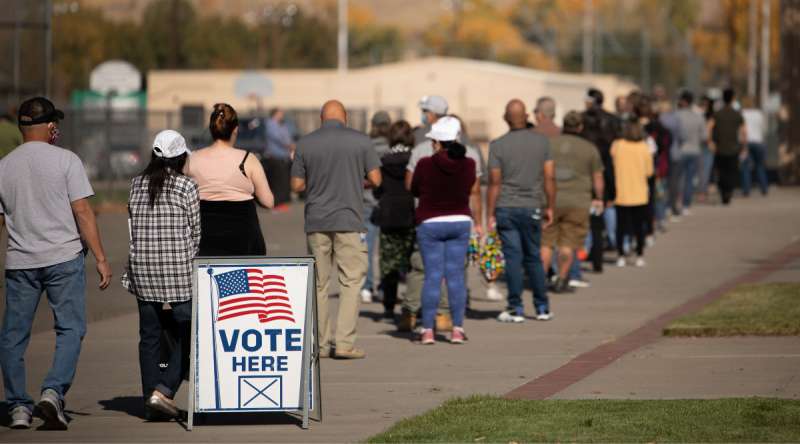
Early voting begins Saturday, Oct. 17 and runs through Friday, Oct. 30.
To vote by mail, voter registration must be completed 14 days before the election, which is Nov. 3. Mail ballots can be submitted to polling locations or county clerk’s office by 7 p.m. on Election Day. Mail ballots must be postmarked on or before Nov. 3 and received the fourth day after the election by 5 p.m.
Nevadans can also vote on Election Day, Tuesday, Nov. 3 from 7 a.m. to 7 p.m. Nevada allows same-day voter registration, and anyone in line by 7 p.m. can still vote, even after polls close.