By Mark Robison, Reno Gazette Journal
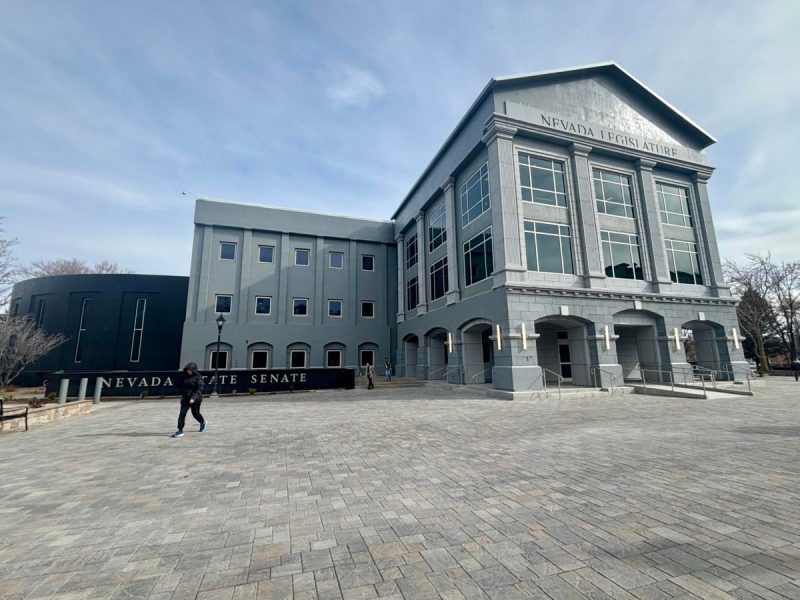
Twenty-four new laws passed by the 2025 Legislature went into effect in Nevada on July 1.
Though several focus on mundane things like budget allocations, poultry inspections and clearer definitions used for insurance coverage, others may hold a unique interest for Nevadans. Some of these new laws include removing the word “master” from Nevada law, increasing discipline for cell phones in class, and requiring measures to address rising temperatures.
Here’s a look at some of the new Nevada laws.
What are the new laws in Nevada?
Heat mitigation ordered in Washoe and Clark counties
Assembly Bill 96 requires that cities and counties with more than 100,000 residents include heat mitigation efforts in their master plans for growth.
The only two Nevada counties that big are Washoe and Clark.
They will be required to develop strategies for public cooling spaces, public drinking water and shade over paved surfaces.
The bill was supported by Democratic lawmakers and opposed by Republican ones. Gov. Joe Lombardo had vetoed a similar bill in 2023, but signed this one. The city of Reno backed it.
Easing Nevada’s teacher shortage
Assembly Bill 49 allows school districts and charter schools to hire teachers—for up to 1 year—if the teachers are licensed in good standing in another state.
It makes teaching more flexible and potentially addresses staffing shortages by allowing teachers to work while they pursue their Nevada license. Testifying in support of the bill, the Nevada State Education Association noted the state has more than 1,000 educator vacancies.
The bill passed unanimously.
No ‘masters’
In part aimed at modernizing language in Nevada law, Assembly Bill 344 replaces use of the word “master” with “judicial officer.”
A legislative working document explained that the bill “allows courts to designate different titles for judicial officers, as long as the title does not include ‘master.’”
It passed unanimously.
‘Granny’ flats must be allowed in Nevada ‘s largest cities and counties
Approved by Democrats and opposed by Republicans in the Legislature, Assembly Bill 396 requires that accessory dwelling units—AKA granny flats—must be allowed in certain counties and cities.
The counties are Clark and Washoe, both with more than 100,000 residents. The cities are those with more than 60,000 residents: Reno, Sparks, Las Vegas, North Las Vegas and Henderson.
The bill’s language declares affordable housing is essential in Nevada and that accessory dwelling units are vital to increasing the supply of affordable housing.
Reno had banned homeowners from constructing small buildings for renting out on their properties. However, pushed along because of this legislation, the Reno City Council approved an accessory dwelling unit ordinance in October last year.
Kids can opt to attend different schools
Assembly Bill 533 lets students attend public schools outside their attendance zone if the other school has space available at their grade level.
Districts do not have to provide transportation for students who choose to do this.
Washoe County School District already implemented a similar program in 2023 called “School of Choice.”
AB533 expands this kind of open enrollment statewide.
Only one lawmaker voted against it, Democratic Assemblywoman Brittney Miller from Las Vegas.
Cell phone restrictions updated in schools
Nevada public schools already have cell phone restrictions, but Senate Bill 444 updates the requirements.
It expands the types of devices covered — anything that transmits text, audio or images — and it requires progressive discipline based on the number and seriousness of violations.
It spells out exceptions for emergencies, teacher-approved instructional use and some students on individualized education plans. It also puts limits on instructional time involving such electronic devices.
The bill passed unanimously.
Carly Sauvageau contributed to this report.
USA TODAY Network via Reuters Connect