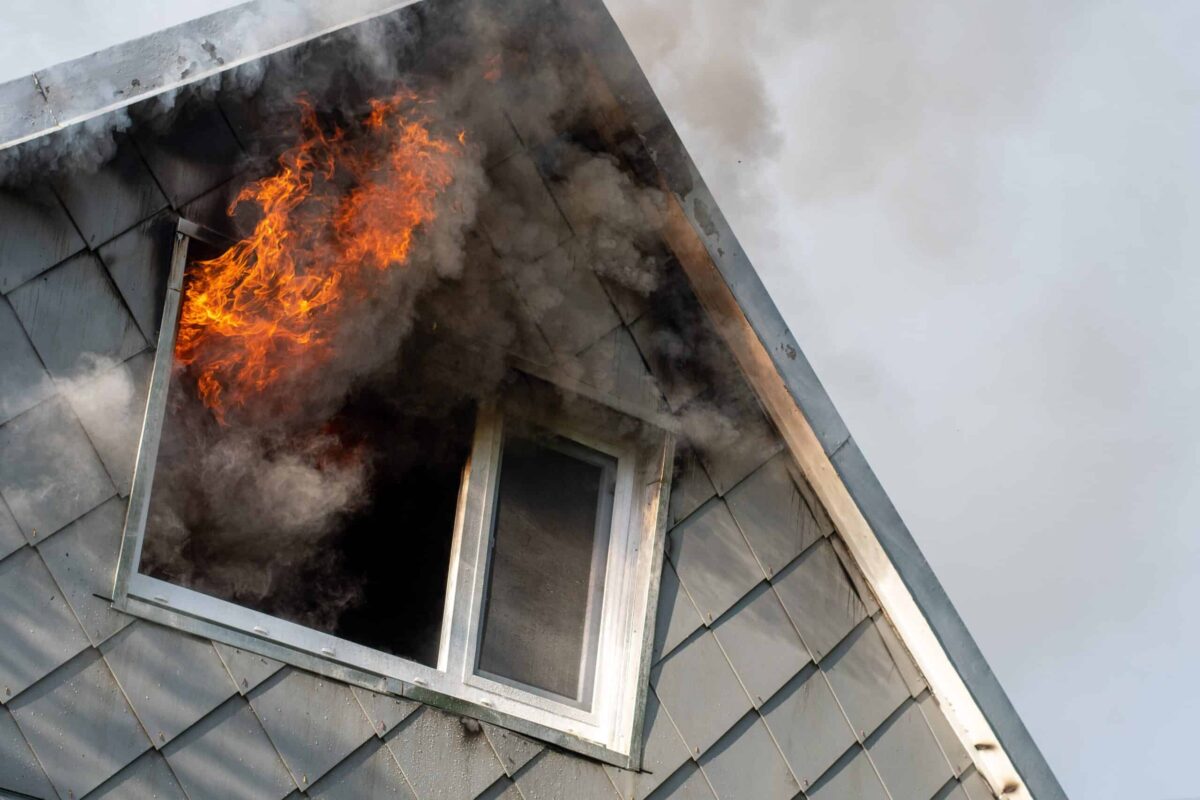
Learn how you can prevent house fires with this comprehensive guide. (TLF/Shutterstock)
House fires and wildfires are common in Nevada, but these steps and resources will help you prepare and keep your family safe if disaster strikes.
House fires are the single most common disaster across the nation, killing seven people, mostly children and the elderly, every day, according to the American Red Cross.
Southern Nevada experienced a spike in house fires in 2025, News 3 reported earlier this year. As of the end of October, Red Cross of Southern Nevada volunteers have responded to more than 215 home fires and assisted nearly 1,000 people. Additionally, the state experienced its largest wildfire season since 2020, according to the Nevada Current.
Deadly and often unpredictable, fires aren’t entirely preventable, but there are steps you can take to mitigate the risks and keep your home and your family safe. Read on for prevention and preparation tips as well as resources for what to do in case of a fire.
What to do about house fires
Prepare and prevent
Preventing a house fire can be as simple as checking for exposed wires and loose plugs, maintaining appliances, and turning off space heaters when you leave a room. Air conditioners, in particular, work overtime during Nevada’s long, hot summers, so it’s important to keep these units properly maintained and replace filters every one-to-three months.
“Las Vegas summers bring extreme heat and dry conditions that can turn a small spark into a fast-moving fire,” Executive Director of the American Red Cross Southern Nevada Chapter Rachel Flanigan said in a press release. “We encourage everyone to take simple precautions … to help keep their families safe.”
During Fire Prevention Week in October, the American Red Cross of Northern Nevada emphasized the growing dangers of lithium-ion batteries, commonly used in electronics, e-bikes, e-scooters, and other household devices. When damaged or improperly used, lithium-ion batteries may overheat, catch fire, or even explode.
“We’re seeing these types of fires more frequently,” Northern Nevada Executive Director Bridget Posson said. “It’s critical to educate yourself on the proper use, charging, and disposal of these batteries to prevent fires and protect your home.”
The Red Cross provides several recommendations for home fire preparedness on its website. These tips apply no matter where you live in Nevada. For instance, any item in your home that heats up should be kept at least three feet away from flammable and combustible items.
Since cooking is the leading cause of home fires, the U.S. Fire Administration and FEMA recommend keeping your stove clear of pot holders, towels, or any other item that can catch fire. Never leave the kitchen while food is cooking on the stove top, and never pour water on a grease fire.
In case of blackouts, flashlights are preferable to candles (which should never be left burning unattended). Flameless candles are a safer alternative to open flames; something to keep in mind during the holiday season.
If anyone in your home smokes cigarettes, consider designating a smoking spot outside your house and requiring smokers to douse cigarette butts with water when done. Smoking in bed or when medicated is a definite no-no, as is smoking in a home where someone uses oxygen.
As for your home’s exterior, the house number should be viewable from the street, day and night. This will help firefighters locate your house in case of an emergency. And if you’re a pet owner, a sign in the window listing the number of animals in your home may help rescuers locate them.
Visit the Red Cross Website for more ideas on preparing for a home fire. For a complete checklist to make your home fire-safe, inside and out, visit the Nevada State Fire Marshal’s website.
Sound the alarms
Smoke alarms are proven to double your chance of survival when a fire breaks out at home. These alarms should be installed on every floor of your home, in bedrooms, and outside sleeping areas. The Red Cross recommends testing and changing the batteries twice a year during Daylight Saving Time (DST).
“Most home fire deaths happen in homes without working smoke alarms,” Flanigan said. “This weekend, take a few minutes to test your alarms, replace old batteries, and ensure alarms are installed on every level of your home.”
Since 2014, the Red Cross has installed 2.5 million smoke alarms in homes for free through its Home Fire Campaign. You can learn more about having free alarms installed in your house through the Home Fire Campaign or sign up for a home visit on the Red Cross website.
Create a family plan
Two minutes. That’s the minimum amount of time you have to escape if a fire breaks out in your home. That’s why it’s important to develop and practice a family evacuation plan.
Your home fire escape plan checklist should include two ways for your family members to escape any room in the house, a meeting space for once you’re outside, and an emergency communication plan in case you get separated. If you have pets, be sure to include them in your plan as well.
In addition to mapping out your house on paper, practice your family plan in real time at least twice a year.
Tips for kids
While the topic of a house fire may seem scary to discuss with children, it’s important for everyone’s safety to get them involved and to educate them on information like:
- When to stop, drop, and roll
- How to call 9-1-1
- The dangers of fire, matches, and lighters (keep these out of reach)
- Never open doors that are hot to the touch
- If your escape route is blocked, put a wet towel under the door, open a window, and signal for help with a flashlight or brightly colored cloth
- When escaping through smoke, crawl on the ground
- Never go back into a burning building
The Sparky the Fire Dog Website for Children is packed with fun, age-appropriate activities that teach kids about fire preparedness and prevention, including videos, coloring sheets, and games.
Tips for seniors
From hearing and vision loss to medications that cause drowsiness, there are several reasons why seniors 65 and older are twice as likely to be injured or killed in a fire, according to the National Fire Protection Association.
In the SeniorLiving.org Guide to Senior Fire Prevention, tips for keeping seniors safe in a fire include installing sprinklers or alarms with strobe devices, placing fire extinguishers in multiple rooms, and storing essentials such as hearing aids, glasses, or wheelchairs within easy reach.
Many of the tips for seniors also apply to households with people who have disabilities. Visit the National Fire Protection Association (NFPA) for more information.
What about wildfires?
The cost of human error
Nevada’s wildfire season typically spans from May to October, but that doesn’t mean fires are limited to those months. Dry weather, vegetation, lightning strikes, and unattended campfires are among the causes of wildfires throughout the year.
Noting that humans cause 85 percent of wildfires, the Bureau of Land Management issued a Fire Prevention Order this summer to prohibit certain fire-related activities on BLM-managed lands.
“Most wildfires in Nevada are caused by humans, often accidentally, and too often are entirely preventable,” BLM Nevada Fire Management Officer Brock Uhlig said. “By following these measures and taking simple precautions—such as keeping a fire extinguisher and water on hand in case a fire starts—we can make a significant difference in preventing wildfires.”
Visit the BLM website for a complete map of Nevada fire restrictions on public lands.
Fireproof your property
Since wildfires are fueled by dry brush and debris, Las Vegas and Reno city governments suggest you fireproof or “harden” your property by clearing flammable materials, maintaining the landscape and keeping the area around your home free of debris, avoiding the use of spark-producing tools on dry or windy days, and creating a 100-foot defensible space around your house.
In wildfire events, 60-90% of home loss is due to embers traveling ahead of a fire and igniting the home or combustible material near the home, according to the City of Reno.
The NFPA offers a downloadable fact sheet to help you prepare your home for a wildfire.
In case of evacuation
As the Nevada Current reports, Nevada places fifth in the nation for total land area affected by wildfires, and housing development in the region has rapidly expanded into areas with a high wildfire risk. More than 1,300 homes were evacuated during the Pinehaven Fire in Reno in 2020, while the 2024 Washoe County Davis Fire forced the evacuation of 20,000.
Last year, a community in the Humboldt-Toiyabe National Forest was evacuated in July due to a 30-acre fire, reports 8 News Now.
Homeowners may not receive much notice to evacuate in an emergency, so it helps to be prepared for the worst-case scenario.
The University of Nevada, Reno (UNR) offers a comprehensive guide for evacuating your home, including items to put in a go-bag, advice on preparing family members, what to wear, and how to prepare your vehicle, home, and your pets, including horses, livestock, and other large animals. You can find the checklist here.
This article first appeared on Good Info News Wire and is republished here under a Creative Commons license.


Nevada treasurer bills US for $2.1B after Trump tariffs struck down
By Mark Robison, Reno Gazette Journal Nevada State Treasurer Zach Conine sent a bill Friday to the federal government for $2.1 billion for a refund...
Nevada named among the worst places to drive in 2026
By Carly Sauvageau, Reno Gazette Journal Whether you’re trying to head to the North Valleys after 5 p.m. or make it out to USA Parkway during a...
En Nevada, nueva ley permite seguros de vivienda sin cobertura contra incendios forestales
Este artículo fue publicado originalmente en inglés, escrito por Naoka Foreman, y traducido y adaptado al español por el equipo editorial de The...

Elon Musk’s Boring Company evades millions in Nevada safety fines
Democratic lawmakers want the Clark County District Attorney's Office to investigate Lombardo’s alleged interference in health, safety, and...

Oppose ICE? Here’s how you can take action
The moment we’re in The US Senate is currently deciding whether to approve new funding for the Department of Homeland Security (DHS), including...

Venezolanos en Nevada tienen posturas divididas sobre la salida de Maduro
El texto fue escrito originalmente en inglés por Naoka Foreman y publicado en The Nevadan. La versión en español fue editada, traducida y adaptada...