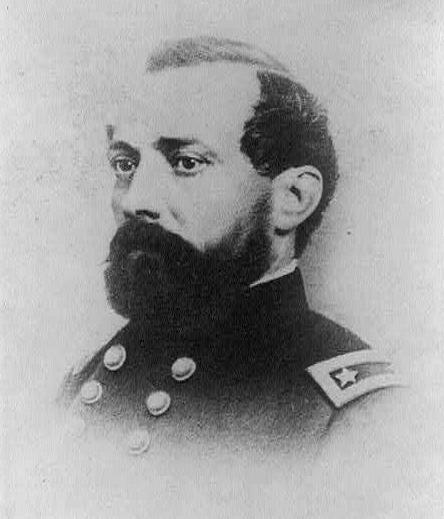
A photo of Jesse Lee Reno in military clothing. (Civil War Photograph Collection, Library of Congress/Wikimedia Commons)
Jesse Lee Reno was shot in the chest and killed. Find out why, plus learn 11 other facts about Reno, Nevada’s storied namesake.
Reno—widely known as the “Biggest Little City in the World” thanks to its unique ability to provide big-city excitement and entertainment while retaining its small-town charm—isn’t named after an entertainment industry mogul, notable local politician, or an early settler. Instead, the city’s namesake is someone who never even set foot in Nevada, let alone Reno.
Founded on May 9, 1868, the city was originally named Argenta, but the name didn’t stick, and it was quickly changed to Reno. The new name was chosen to honor fallen U.S. Army officer Jesse Lee Reno, who died six years earlier during battle in Maryland. While Reno lacked specific ties to the city that took his name, he was highly respected for his military service, and naming cities and towns after war heroes and military figures was a common practice in the U.S.
While much of what is publicly known about Reno relates to his military career and achievements, we were able to dig up some other interesting facts about his life. Keep reading to learn more about the man Reno is named after, including what he did when he wasn’t serving in multiple wars and where else in the U.S. he’s honored.
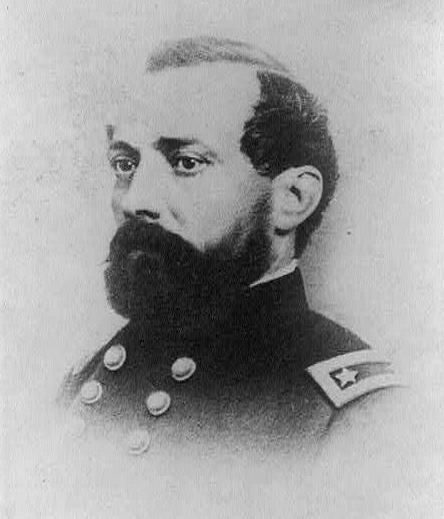
1. Jesse Lee Reno wasn’t born in Nevada
Reno may have a city in Nevada named after him, but he wasn’t born in the Silver State. Reno was actually born in Wheeling, Virginia (now West Virginia) in 1823. About seven years later, his family moved to Franklin, Pennsylvania, which is where he spent most of his childhood.
2. His family’s last name used to be Renault
Reno’s family changed its last name from Renault to Reno after immigrating to the U.S. (then called the United Colonies) from France in 1770.
3. Reno was an exceptional student
Reno graduated from the prestigious West Point Military Academy in West Point, New York, in 1846. He graduated eighth in his class of 59 students. Some of Reno’s classmates at West Point included George B. McClellan, George Pickett, George Stoneman, Darius N. Couch, and Thomas Jackson, who we discuss again later on in this piece.
4. He was a well-respected United States Army officer
Reno served in the Mexican-American War and earned recognition for his valor twice—at the Battle of Cerro Gordo and the Battle for Mexico City. The Union General also served in Utah before serving in the American Civil War.
Reno’s service took him to many parts of the country. He was an ordnance officer at Frankford Arsenal near Philadelphia, commander of the Mount Vernon Arsenal in Mobile, Alabama, and led an arsenal at Leavenworth, Kansas, to name just a few highlights.
Though he was promoted several times throughout his career, Reno was widely known as a “soldier’s soldier” because he frequently fought alongside his men.
5. He was also a math professor
Between the Mexican-American War and the Civil War, Jesse Lee Reno held several other odd jobs. He served as an assistant professor of mathematics at West Point in 1849 and also worked on a topographical survey in Minnesota.
6. He was married once and had five children
Reno married Mary Cross in 1853 at St. John’s Episcopal Church in Washington, D.C. The couple had five children together, including one who was named after his father.
7. He fought against his good friend
Not long after being promoted to Major General and taking charge of the IX Corps, Reno had to fight against Thomas (Stonewall) Jackson, a former classmate and good friend, at the Second Battle of Bull Run and the Battle of Chantilly.
8. Reno was shot in the chest
During the Battle of Fox’s Gap, South Mountain in 1862, Reno was shot off his horse. Some reports say the shot, which struck Reno in the chest, was fired by a rookie Union soldier who mistakenly thought he was Rebel Cavalry, while others claim it came from a Confederate sharpshooter.
The shot was fatal, and Reno’s last words reportedly were, “Tell my command that if not in body, I will be with them in spirit.” Three days later, he was remembered by members of the 9th Corps who cheered “Remember Reno” as they charged into battle at Antietam.
The Reno Monument at Fox’s Gap marks the spot where Reno was killed in battle and honors his leadership and legacy.
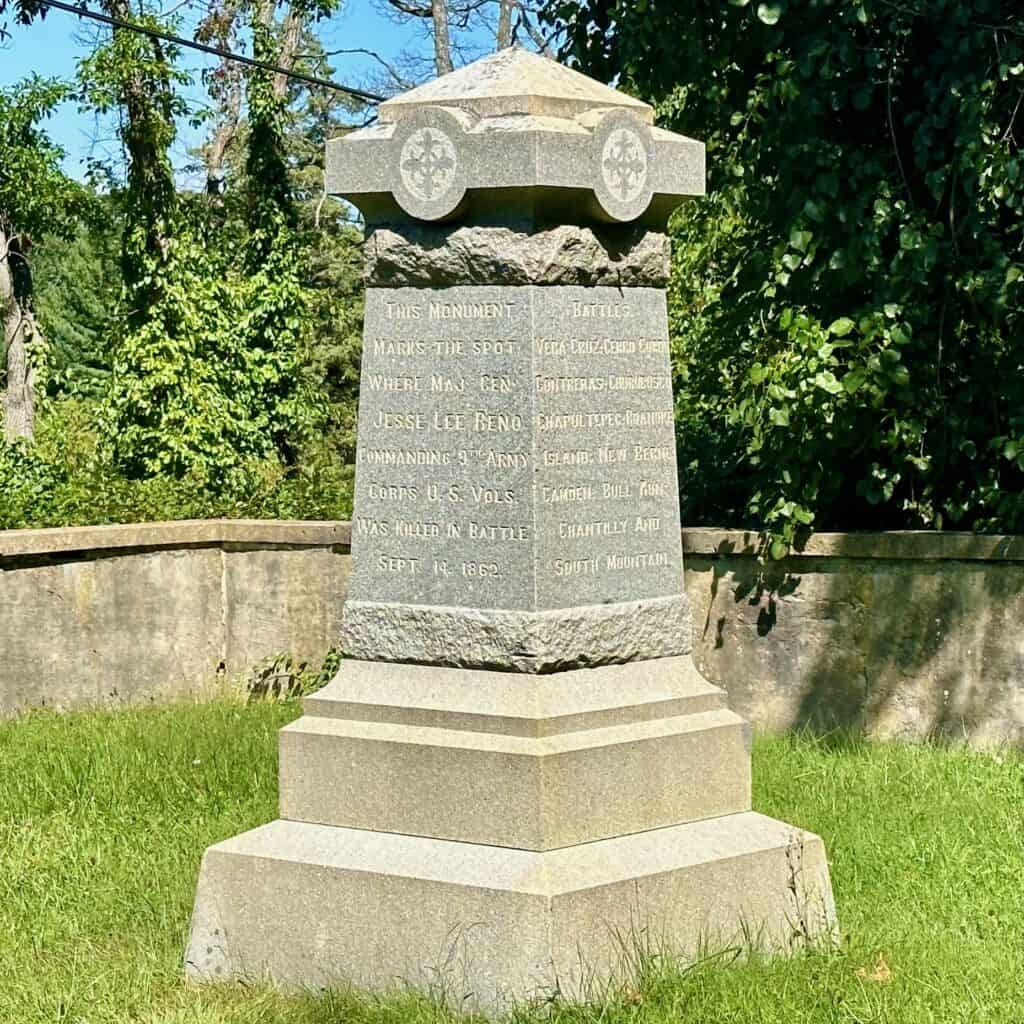
9. His death set a record
Reno was the highest-ranking Union general from what is now West Virginia to be killed during the Civil War.
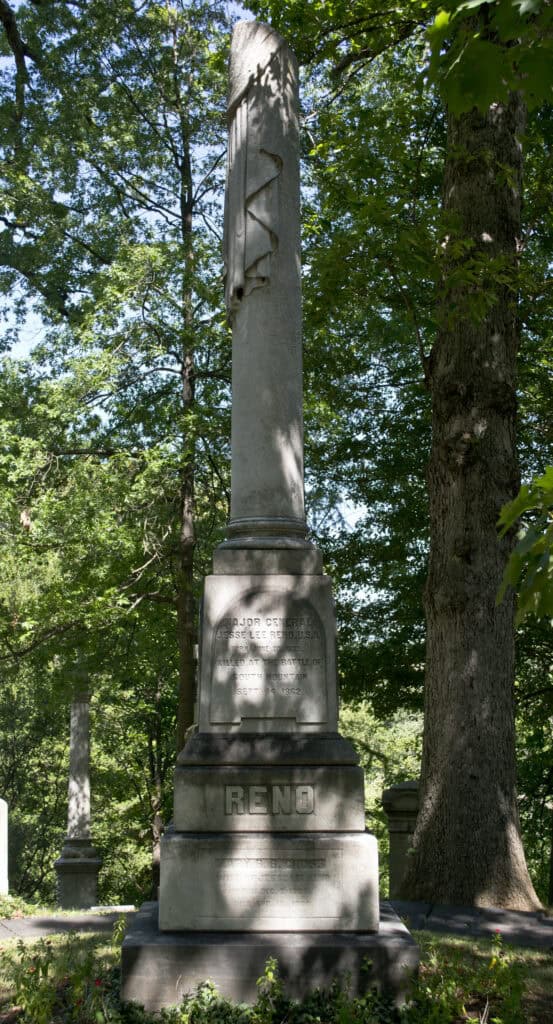
10. There is a statue of him in Reno, Nevada
The Major General Jesse Lee Reno War Memorial Statue is located in Powning Veterans Memorial Park. The life-size statue was unveiled in 2006.
11. Reno, Nevada, isn’t the only place named after him
Reno has several locations throughout the country that were named in his honor, including Reno County in Kansas, El Reno in Oklahoma, and Reno, Ohio. Fort Reno, a cavalry post-turned museum in Oklahoma, and The Jesse, a boutique hotel in Reno, Nevada, are also named after Reno.
Additionally, Reno had a school named after him—the Jesse L. Reno School in Washington, D.C., built in 1903—but it closed in 1950. (The school’s interior was repaired in 2014, and now it’s on the National Register of Historic Places.)
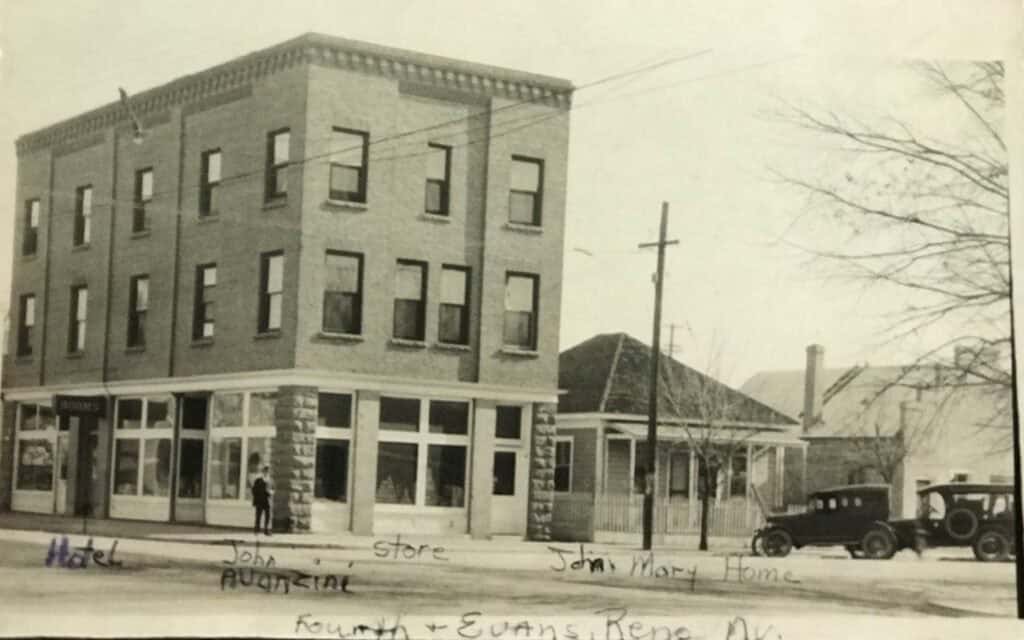
12. He didn’t invent the escalator
Reno’s list of accomplishments is lengthy, but it doesn’t include inventing the escalator (or inclined elevator), though he is often confused with the machine’s real inventor, his son Jesse Wilford Reno.

How Reno became the ‘Divorce Capital of the World’
Reno’s reputation as one of the speediest divorce mills during the first half of the 20th century helped shape the city as we see it today. When it...
The Westside story: Celebrating the heart of Black Las Vegas history
Historic Westside Las Vegas survived and thrived despite segregation and neglect. Now it’s undergoing a Renaissance as a Vegas landmark and cultural...
Feb. 5, 1957: Gas explosion rocks downtown Reno, killing 2
RGJ archives Two gas-fueled explosions, 30 seconds apart, ripped through downtown Reno on Feb. 5, 1957, killing two people and injuring dozens. Both...
How Nevada waited a century to officially add Las Vegas
By Brett McGinness, Reno Gazette Journal Since 1867, Nevada's de facto borders have been irregular polygon-ish shape we all know today —...
Walk your way through Carson City’s fascinating past on the Kit Carson Trail
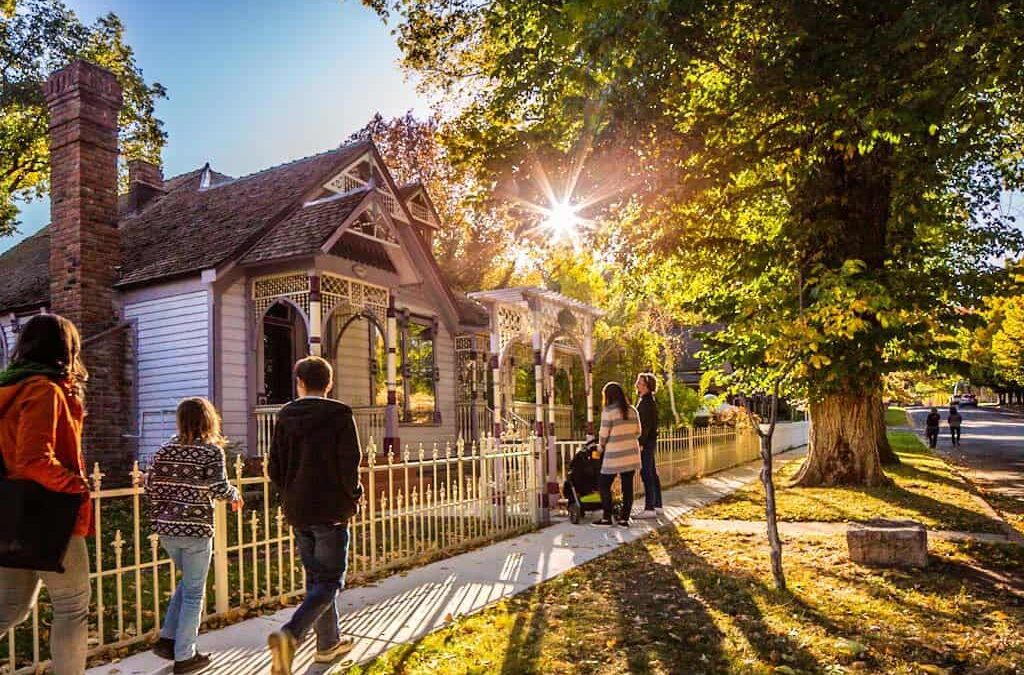
With historic buildings, Victorian architecture, and the former U.S. Mint, the 2.5-mile Kit Carson Trail is a self-guided trip back in time. Named...

8 creepy facts about Nevada that textbooks leave out
From paranormal sightings to barren highways and a centuries-old curse, there are some wild facts about Nevada. Check out eight of the creepiest...