
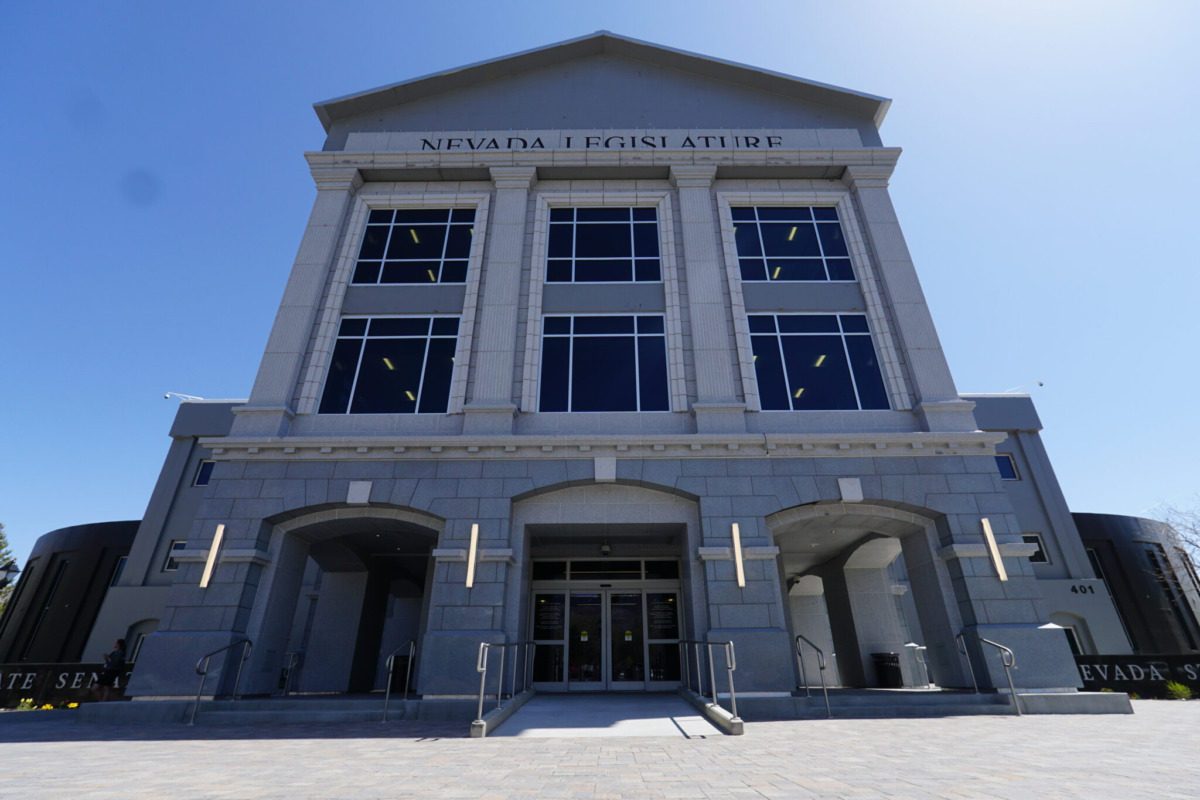
The Nevada Legislative Building in Carson City (Jeniffer Solis/Nevada Current)
By April Corbin Girnus
The proposed Summerlin movie studio bill now under consideration by lawmakers in a special legislative session could force the state to cut expenses or increase revenue to accommodate the bill’s massive expansion of transferable tax credits.
Assembly Bill 5, the resurrected Assembly Bill 238 from the 2025 Legislative Session earlier this year, proposes expanding Nevada’s film tax credit program from $10 million per year to $120 million per year, beginning in 2029. Most of the tax credits would be associated with productions at Summerlin Studios, a proposed movie studio in Las Vegas backed by Howard Hughes Corporation, Sony Entertainment and Warner Brothers Discovery.
Legislative Counsel Bureau fiscal analyst Sarah Coffman told lawmakers Thursday that their analysis found that the massive expansion of transferable tax credits would result in the state’s ending fund balance dipping below the statutorily required 5% in 2030. That would force lawmakers to either cut tens of millions of dollars in state spending or increase revenue by that amount to maintain a balanced budget.
The analysis, discussed during a hearing of the special session’s Assembly Committee on Jobs, served as a counterpoint to film studio supporters who have for years argued that the tax credits have no fiscal downside because they are only awarded after qualified spending has occurred.
Transferable tax credits must be accounted for during the state budgeting process. One state fiscal analyst previously described it as “negative revenue.”
Revenue generated by the projects associated with the transferable film tax credits is supposed to offset the credits, but the return on investment is hotly debated across the nation.
A fiscal analysis commissioned by supporters of the Summerlin Studios bill found that for the proposed $1.65 billion in transferable tax credits over 15 years, the state would receive $384.4 million back in direct revenue. That translates to Nevada receiving back 23 cents for every $1 of transferable tax credits handed out.
“So, for every dollar, we’d lose 77 cents,” said Assemblymember Greg Hafen, a Republican from Pahrump whose questions in the hearing prompted a closer look at the impact to the state budget.
If locally generated taxes are considered, the return on investment rises to 53 cents for every $1, according to Guy Hobbs, who led the analysis.
The true benefit to the state, Hobbs and others argued, comes with the indirect and induced revenue generated. With that, supporters project the return on investment to balloon to $32 per $1. That would include a required minimum $300 million spent on qualified expenses like labor, set design, catering, and other elements that involve money going from business to business.
“The economic report does not reflect the fiscal returns on those,” said Matt Walker, the Howard Hughes lobbyist who presented the bill.
AB5 is largely unchanged from its previously considered iteration. The implementation date for the availability of transferable film tax credits was moved back to 2029.
The special session bill also includes provisions that would allow the state to suspend the acceptance of transferable tax credits during economic downturns. Walker likened it to the mining industry prepaying their taxes, a maneuver the state has turned to more than once to address budget shortfalls.
Assemblymember Howard Watts, a Democrat from Las Vegas, questioned bill presenters about AB5’s diversity and inclusion targets. The bill sets five standards, two of which must be met in order for a production to qualify for film tax credits.
Watts said that it appeared a film production could meet the requirements by having just six people into key roles.
Walker didn’t dispute Watts’ reading of the diversity requirements, but he defended the bill as “a serious commitment to thinking outside the box” and creating targets that could be reached by productions that might not be able to meet percentage requirements.
“This is not intended to water it down and create some kind of alternative minimum,” Walker added.
Supporters are describing the film bill as “a jobs bill” that will bring 19,000 construction jobs to the state, something labor unions say is desperately needed. Two labor groups are leading the charge in support of the film bill.
AB5 is also being pitched as an education bill that will provide dedicated funding for expanding pre-K seats in Clark County. The bill would create a special tax district around Summerlin Studios and funnel some of the generated revenue into a standalone fund to support the expansion of full-day early education within the Clark County School District.
Clark County Education Association, the union representing CCSD teachers, is backing the bill.
So too are the University of Nevada Las Vegas and the University of Nevada Reno, which have signed memorandums of understanding with Warner Brothers and Sony, respectively, to develop job training and other opportunities for their students.
The Assembly Committee on Jobs took no action on the bill on Thursday.
Studio bill escapes premature death
Thursday’s policy debate over the film tax credit bill almost didn’t happen after one Assembly member attempted to kill the bill early in the special session.
Assemblymember Selena La Rue Hatch, a Democrat from Reno, requested the full Assembly vote to immediately reject AB5. Immediately rejecting a bill as it’s being introduced into the Legislature is an option listed in the procedural rules, though it is rarely, if ever, used.
The attempt to kill the film bill might have succeeded, with 21 of the 41 Assembly members physically present in the chambers voting to reject the bill. However, after La Rue Hatch moved for the vote, Assembly Speaker Steve Yeager immediately recessed the chamber. When the body reconvened, Assemblymember Sandra Jauregui, who serves as the chamber’s majority leader and is the sponsor of the film bill, announced Assemblymember Tracy Brown May would be participating remotely.
Brown May, a Democrat from Las Vegas who voted for a previous iteration of the film bill when it was considered, voted against rejecting the bill, resulting in a 21-21 tie on La Rue Hatch’s attempt to kill the bill. Motions need a majority to pass, so a tie is equivalent to a failure.
Assemblymember Cecelia Gonzalez, a Las Vegas Democrat who supported rejecting the film bill, asked Yeager to explain why Brown May was authorized to vote remotely. Legislative procedural rules state that remote votes are only acceptable for “exceptional circumstances,” Gonzalez noted.
Yeager said that Brown May had “personal matters to attend to” and that it would “not be appropriate” for him to publicly disclose them.
“I have determined, in consultation with legal counsel, that remote participation is appropriate in this circumstance,” he added.
The Assembly earlier this year, during the regular legislative session, narrowly passed a version of the film bill — 22 yays, 20 nays.
Several Assembly members who voted to pass a film bill in June voted to reject it Thursday. The opposite was also true.
Thursday’s surprise vote highlights the narrow margins and changing positions at play with the controversial bill, which has failed to pass two regular sessions and would be the State of Nevada’s largest ever public subsidy.
Nevada Current is part of States Newsroom, a nonprofit news network supported by grants and a coalition of donors as a 501c(3) public charity. Nevada Current maintains editorial independence. Contact Editor Hugh Jackson for questions: [email protected].


Activistas dicen que Nevada priorizó gestos políticos antes que protecciones reales para inmigrantes
Durante la sesión legislativa especial de Nevada en noviembre —instancia en la que los legisladores abordan asuntos urgentes o algunos cuyas...

Wins and losses emerge after Nevada’s special session
Despite an affordability crisis against the backdrop of a severe housing shortage, lawmakers prioritize public safety, harsher penalties for petty...
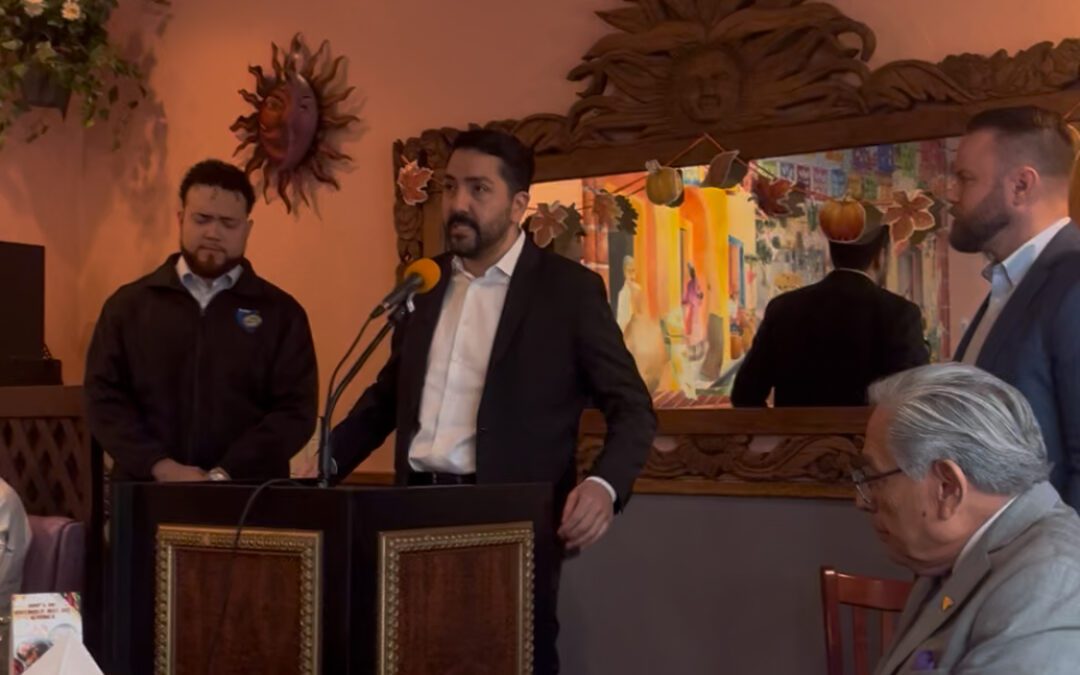
What could a major film studio investment mean for East Las Vegas?
A controversial film tax credit bill is being decided at Nevada’s special session. While it has detractors, local Latino leaders believe it will...
Gov. Lombardo calls Nevada special session for film tax credits, crime, much more
By Mark Robison, Reno Gazette Journal Gov. Joe Lombardo issued a proclamation Wednesday evening calling the Nevada Legislature into a special...
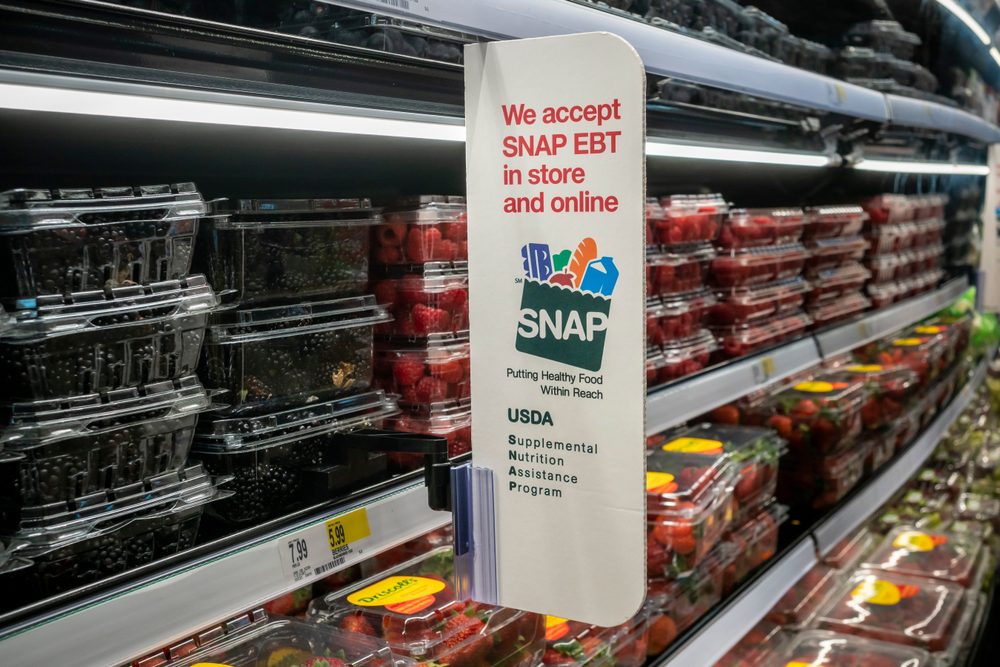
Legislators, governor will address SNAP in special session if shutdown lingers
By April Corbin Girnus Gov. Joe Lombardo’s deputy chief of staff and finance director told lawmakers a special legislative session will happen in...
3 nuevas leyes en Nevada que afectan a la comunidad latina
Suscríbete a Vegas Somos y recibe noticias como esta a tu email Desde el 1 de julio entraron en vigor 190 proyectos de ley aprobados durante la...


