AP Photo/Elise Amendola, File.
The good news: You will get a glorious extra hour of sleep. The bad: It’ll be dark as a pocket by late afternoon for the next few months in the U.S.
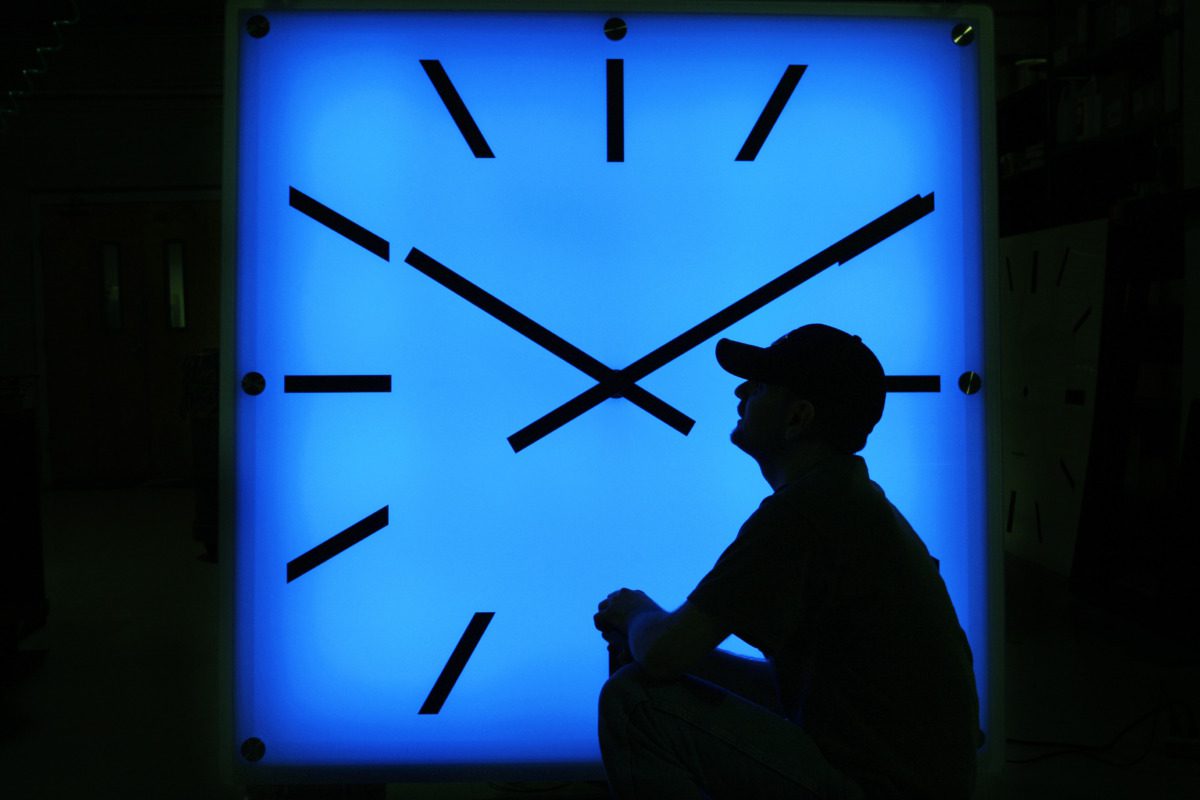
Daylight saving time ends at 2 a.m. local time next Sunday, Nov. 3, which means you should set your clock back an hour before you go to bed. Standard time will last until March 9 when we will again “spring forward” with the return of daylight saving time.
That spring time change can be tougher on your body. Darker mornings and lighter evenings can knock your internal body clock out of whack, making it harder to fall asleep on time for weeks or longer. Studies have even found an uptick in heart attacks and strokes right after the March time change.
“Fall back” should be easier. But it still may take a while to adjust your sleep habits, not to mention the downsides of leaving work in the dark or trying exercise while there’s still enough light. Some people with seasonal affective disorder, a type of depression usually linked to the shorter days and less sunlight of fall and winter, may struggle, too.
Some health groups, including the American Medical Association and American Academy of Sleep Medicine, have said it’s time to do away with time switches and that sticking with standard time aligns better with the sun — and human biology.
Most countries do not observe daylight saving time. For those that do — mostly in Europe and North America — the date that clocks are changed varies.
Two states — Arizona and Hawaii — don’t change and stay on standard time.
Here’s what to know about the twice yearly ritual.
How the body reacts to light
The brain has a master clock that is set by exposure to sunlight and darkness. This circadian rhythm is a roughly 24-hour cycle that determines when we become sleepy and when we’re more alert. The patterns change with age, one reason that early-to-rise youngsters evolve into hard-to-wake teens.
Morning light resets the rhythm. By evening, levels of a hormone called melatonin begin to surge, triggering drowsiness. Too much light in the evening — that extra hour from daylight saving time — delays that surge and the cycle gets out of sync.
And that circadian clock affects more than sleep, also influencing things like heart rate, blood pressure, stress hormones and metabolism.
How do time changes affect sleep?
Even an hour change on the clock can throw off sleep schedules — because even though the clocks change, work and school start times stay the same.
That’s a problem because so many people are already sleep deprived. About 1 in 3 U.S. adults sleep less than the recommended seven-plus hours nightly, and more than half of U.S. teens don’t get the recommended eight-plus hours on weeknights.
Sleep deprivation is linked to heart disease, cognitive decline, obesity and numerous other problems.
How to prepare for the time change
Some people try to prepare for a time change jolt by changing their bed times little by little in the days before the change. There are ways to ease the adjustment, including getting more sunshine to help reset your circadian rhythm for healthful sleep.
Will the U.S. ever get rid of the time change?
Lawmakers occasionally propose getting rid of the time change altogether. The most prominent recent attempt, a now-stalled bipartisan bill named the Sunshine Protection Act, proposes making daylight saving time permanent. Health experts say the lawmakers have it backward — standard time should be made permanent.
___
The Associated Press Health and Science Department receives support from the Howard Hughes Medical Institute’s Science and Educational Media Group. The AP is solely responsible for all content.


Lake Mead faces low water storage, harmful algal bloom and high heat
By Carly Sauvageau, Reno Gazette Journal Nevadans looking for a weekend get-away from Las Vegas may be tempted to visit Lake Mead. However, it's...

20 billionaires live in Nevada. Here’s who they are
From Republican megadonors and top backers of Trump, to leaders in tech and aerospace, and even the cofounders of Panda Express, Nevada is home to a...

Nevadans face extreme auto insurance rates
Nevadans pay the highest rate of full coverage across the nation, according to a recent report. Vehicle thefts, fraud, traffic congestion, low...
Delays and fees complicate Nevada public records access
Even with robust public records laws in place, barriers still block lawyers and constituents from obtaining information from state agencies....

NV Energy asks PUC to delay peak demand charge start date
By Dana Gentry, Nevada Current NV Energy wants permission from the Public Utilities Commission to push back implementation of its controversial peak...

Who’s eligible for NV Energy $63M overcharge refunds? What to know
By Jason Hidalgo, Reno Gazette Journal NV Energy is preparing to reimburse overcharged customers after reaching a resolution with the Public...