A work crew for Sol-Up, a residential solar installation company, installs solar panel tracks on a Las Vegas home on June 25, 2024. (Casey Harrison/The Nevadan)
Approximately 307 people died in Southern Nevada last year due to heat-related injuries, experts told a panel of lawmakers earlier this month.
You’ll never catch Las Vegas resident Gary Hernandez in one spot for too long.
As the chief compliance officer for Sol-Up, one of the valley’s largest residential solar installation companies, Hernandez is the company’s safety czar. He spends his days not only making sure work crews know proper safety protocol, but also going to several job sites to deliver any additional protective equipment or supplies employees might need.
In addition to what Hernandez, a former police officer, said has been a solid, growing demand for their services here in Las Vegas, the company has also recently expanded into Reno, has a presence in California, and plans soon to set up shop in Idaho. Residential solar adoption continues to grow in Nevada and throughout the West, meaning there’s never a shortage of jobs to go to.
“If something happens, I gotta jump on a plane and fly up there,” Hernandez told The Nevadan during a ride-along interview. “These guys are busting their butts up there,” Hernandez said. “And we’ve got to give them everything that they need so they work efficiently, effectively and safely.”
In addition to providing workers the equipment they need to install large glass panels on residential roofs — harnesses, hardhats, eye and ear protection — Hernandez has, in recent years, also had to prepare them for worsening summertime heat waves.

Gary Hernandez, chief compliance officer at Sol-Up, a residential solar installation company headquartered in Las Vegas, lays out a collection of protective equipment given to work crews to combat extreme heat. Each crew is given an ice box, bottled water, electrolyte packets, reflective clothing, a first-aid kit and directions to the nearest hospital relative to the job site. Photo taken June 25, 2024. (Photo credit: Casey Harrison/The Nevadan)
The work day for Hernandez and his crew begins at 6 a.m. sharp. To combat the heat, Hernandez has made it standard practice to dispatch each crew with supplies to get through the day: portable coolers with ice and bottled water; sugar-free electrolyte packets; cooling packs; sunscreen; foam mats to avoid burns if they need to lie down on pavement or a rooftop; as well as directions to the nearest hospital and a list of emergency contacts.
After crews loaded up work trucks for their jobs that day (The Nevadan interviewed Hernandez on June 25, when the high reached 110 degrees Fahrenheit), Hernandez briefly reminded employees of the extreme heat they were set to endure, as well as what steps they could take to avoid the worst symptoms of fatigue and heat illness.
Daytime high temperatures in Las Vegas seldom dip under triple digits during the summer, and the surface temperature on a roof can be up to 20 degrees hotter than what a thermometer reads.
“If you start cramping at all — any kind of muscle — get off the roof and start hydrating,” Hernandez said. “Remember, since it’s going to be so hot, watch out for each other. If somebody is in an attic, I want somebody [else] to have eyes on them at all times, because it can hit 150 degrees up there.”
While Sol-Up and Hernandez do what they can to help their employees endure the heat, not all outdoor employers provide the same amenities. Nevada currently has no law in place requiring employers to provide any heat protections. Although lawmakers have acknowledged rising temperatures, the state legislature last year failed to pass a bill that would have established basic employee protections during extreme heat.
That bill, Senate Bill 427, would have required employers to develop a written plan to mitigate heat illness, and would have mandated employers to provide outdoor working crews with shade and water once temperatures rose above 105 degrees. The measure passed the state Senate, but ultimately stalled in the assembly after fierce opposition from lobbyists and trade groups.
While supporters at the time stated the bill would have, at a minimum, established a new minimum standard for workplace safety, detractors said companies that provide little to nothing are in the minority and that such a new rule would overburden small businesses.
Hernandez supported the bill, adding that it would have created a level playing field for employers, while mitigating hazards for workers.
“I absolutely would welcome that — I hope it happens,” Hernandez said. “It’s dangerous up there, and I happen to like these guys. … We tell them that if they don’t feel good, if it’s too hot, to push the rest of the job back a day. They may not like it, but if somebody goes down it’s going to get pushed anyway. I’d rather be proactive and preventative than reactive.”
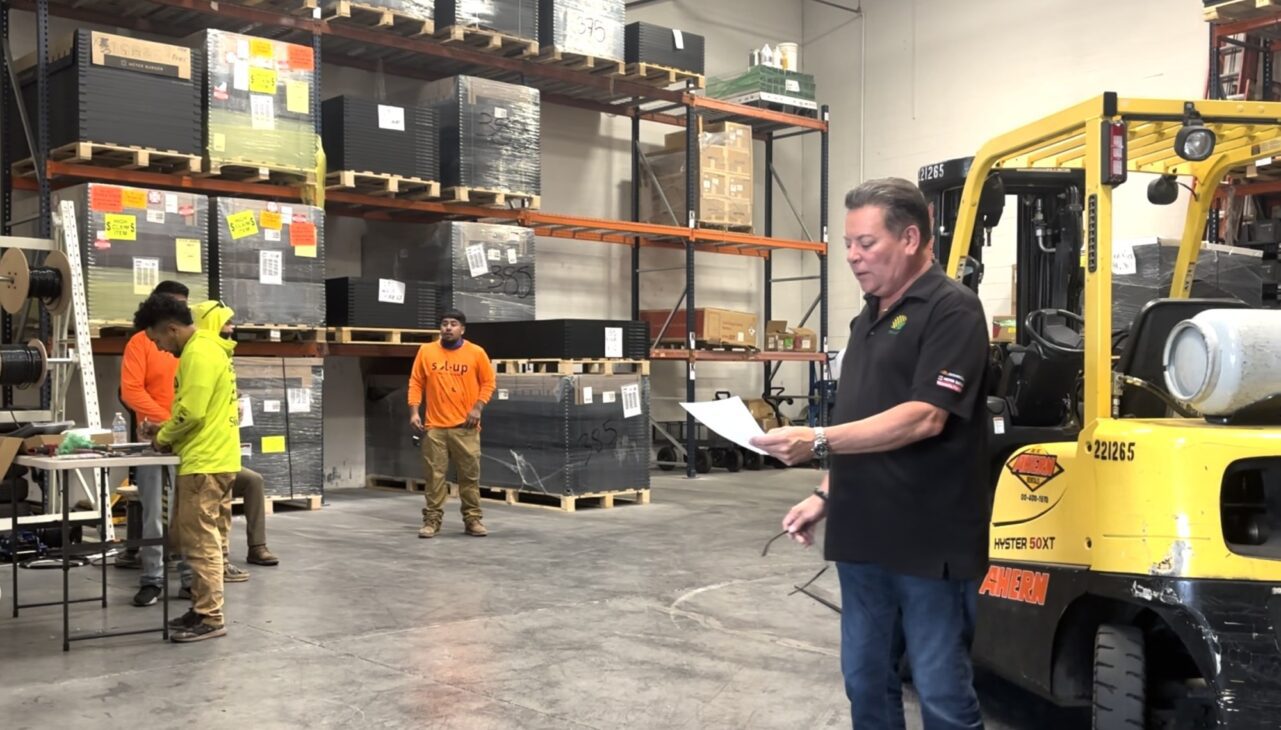
Sol-Up chief compliance officer Gary Hernandez, right, goes over ways to mitigate exposure to extreme heat before installation crews head out to job sites on June 25, 2024. The high temperature that day was 110 degrees Fahrenheit, though temperatures on roofs and attics can reach up to 150 degrees, Hernandez said. (Photo credit: Casey Harrison/The Nevadan)
Other fixes on the way
Las Vegas is in the midst of a record-breaking summer: Earlier this month, temperatures reached 115 degrees for five consecutive days — a stretch that included the setting of a new all-time high of 120 degrees on July 7.
Climate change has brought on longer, more intense bouts of extreme heat in recent years, affecting much of the southern and western US. Nevada is also home to the two fastest-warming cities in the US, according to the nonprofit research group Climate Central, with the average temperature rising 10.9 degrees in Reno since 1970 and 5.8 degrees in Las Vegas.
Researchers told lawmakers earlier this month that approximately 307 people died in Southern Nevada last year due to factors directly tied to heat-related illness — up from 165 heat-related deaths reported in 2022, according to the Nevada Current.
Jafeth Sanchez, director of the Latino Research Center at the University of Nevada, Reno, told The Nevadan that outdoor workers (a group she said is disproportionately people of color) face a much higher risk of death due to heat-related factors, compared to indoor workers.
“It ultimately trickles into becoming a public health issue,” Sanchez said. “It reminds me of the efforts in Nevada with employees exposed to smoke and trying to support employees in those types of environments.”
Though the state has no enforceable law to protect workers against heat, Nevada labor regulators in 2022 adopted an awareness program developed by the US Department of Labor to educate workers about heat illness and related injuries. Additionally, the Biden-Harris administration announced a first-of-its kind rule proposal earlier this month that could add heat protections for up to 35 million workers nationwide.
Under the proposed rule, the Occupational Safety and Health Administration (OSHA) would adopt two heat index thresholds that would factor in heat index and humidity. The first one, at 80 degrees, would instruct employers to provide drinking water and break areas for worker use as needed. At 90 degrees, more protections would be triggered, including calling for employers to monitor workers for signs of heat illness, as well as mandatory 15-minute breaks every two hours.
But the process for adopting such a rule could take months or possibly years to complete. And a recent Supreme Court ruling has undercut the ability of most federal agencies to enact expertise- and science-driven regulations, which could doom the proposal before its ever actually adopted.
In June, the Nevada Division of Industrial Relations, which oversees Nevada OSHA, moved to adopt its own heat illness prevention regulation that would require employers to have a written safety plan and outline occupational hazards that could cause exposure to heat illness. The rule would also compel companies to provide water, means of cooling, and rest periods for employees showing signs of heat illness.
Teri Williams, a spokeswoman for the agency, told The Nevadan in an email the regulation could be adopted ahead of the 2025 legislative session, though several steps remain. The division is accepting input from small businesses until Aug. 2, and will additionally hold a regulation workshop and adoption hearing before it moves to formalize the rule. Williams added that if approved, the rule would then be transmitted to the Legislative Counsel Bureau (LCB) for consideration and approval by the Legislative Commission.
The LCB is a division of the state legislature that acts as a research and legal advice arm for state lawmakers, while the Legislative Commission is a panel of 12 legislators who act as the supervising authority over the LCB.
If the rule is formalized it wouldn’t change much for the way Sol-Up already conducts business, Hernandez said. The way he sees it, a safe and stable work environment is only a net positive.
“Safety sometimes impedes the rate of production, because it slows them down,” Hernandez said. “Sometimes it’s a harness that might slow them down, and sometimes they want to cut corners just to make a job go by fast.
“But I’ll tell them, ‘Why are you in a hurry to get hurt?’”
Editor’s note: This story was updated to clarify the process in which the Nevada Division of Industrial Relations must follow to adopt its extreme heat regulation.

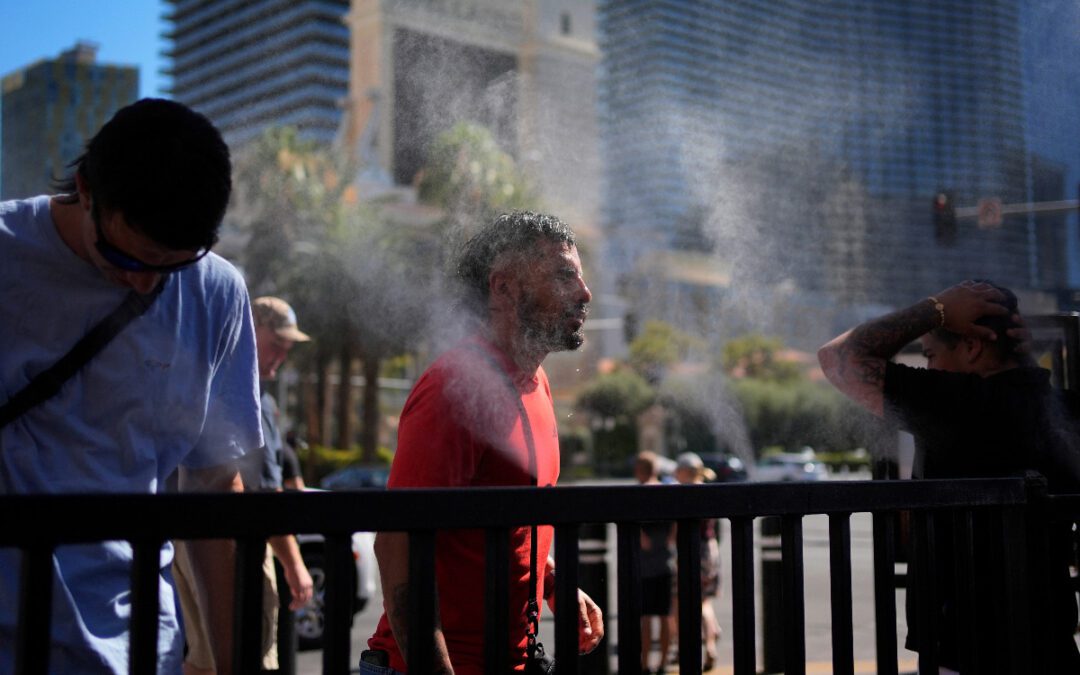
This bill would require some Nevada cities to better protect residents from extreme heat
Five cities in Nevada may soon be required to take more measures to help protect residents from deadly heat. If Assembly Bill 96 becomes law, any...
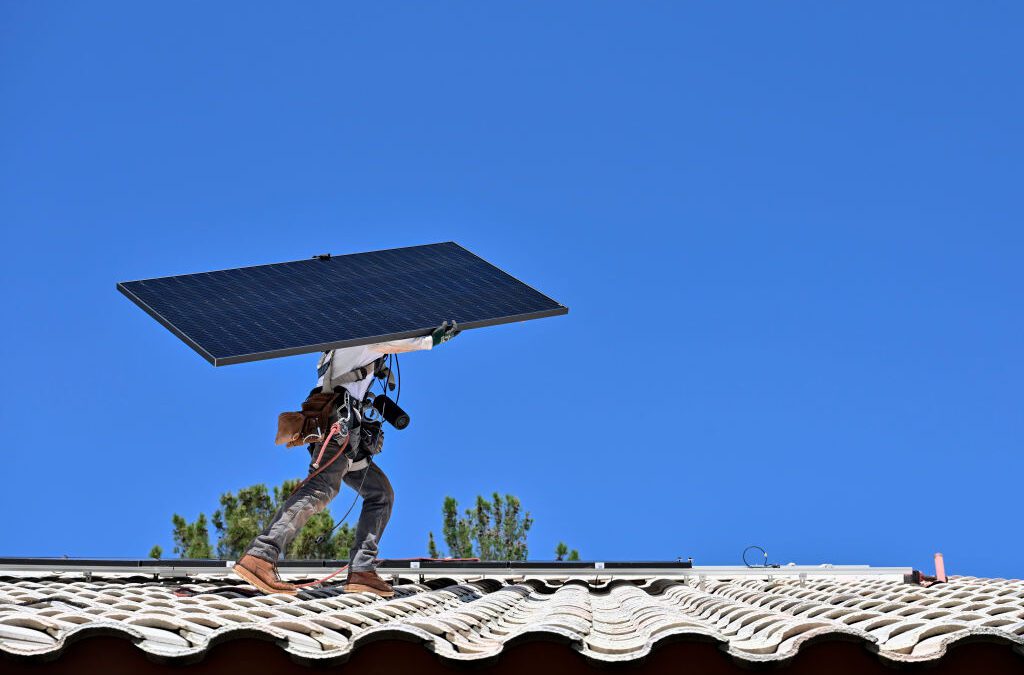
Trump’s Executive Orders Could Raise Energy Costs and Threaten Jobs in Nevada
Nevadans could soon feel the pinch in their wallets and job prospects thanks to recent actions by President Donald Trump. A report shows that...

More than a dozen NPS workers fired from Lake Mead as part of mass federal workforce purge
The positions eliminated include park rangers, engineers, ecologists, maintenance workers, and cultural resource staff for the ninth most-visited...

Condena Chispa Nevada el retiro de apoyo en su pago de electricidad a familias de bajos ingresos
Chispa Nevada condena que la administración Trump retire ilegalmente el financiamiento del programa de Nevada para reducir las facturas de...

Biden admin moves to shield Nevada public lands from mining with support of tribes, local leaders
In one of President Biden’s last moves in office, his administration has moved to protect 269,000 acres of public land in Nevada from a proposed...
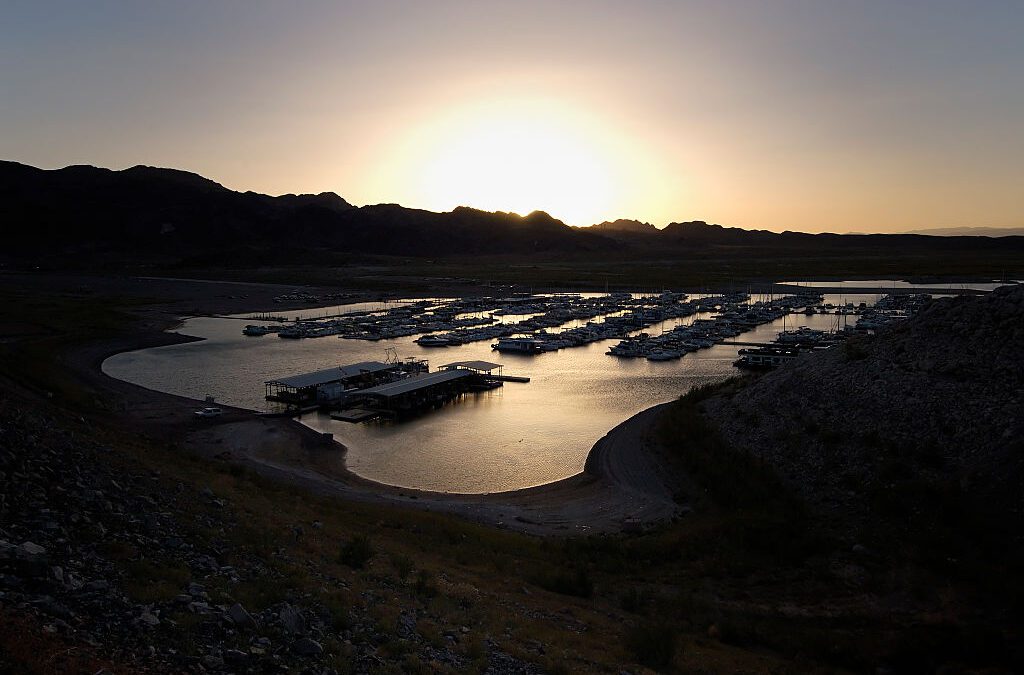
Many fear help for Nevada water conservation will dry up under Trump
Despite billions from the Inflation Reduction Act going to benefit Nevada, President-elect Donald Trump and conservative fiscal hawks may pursue a...